5 Best HRT Options in Southlake: Why Medrein Health Stands Apart
On this page
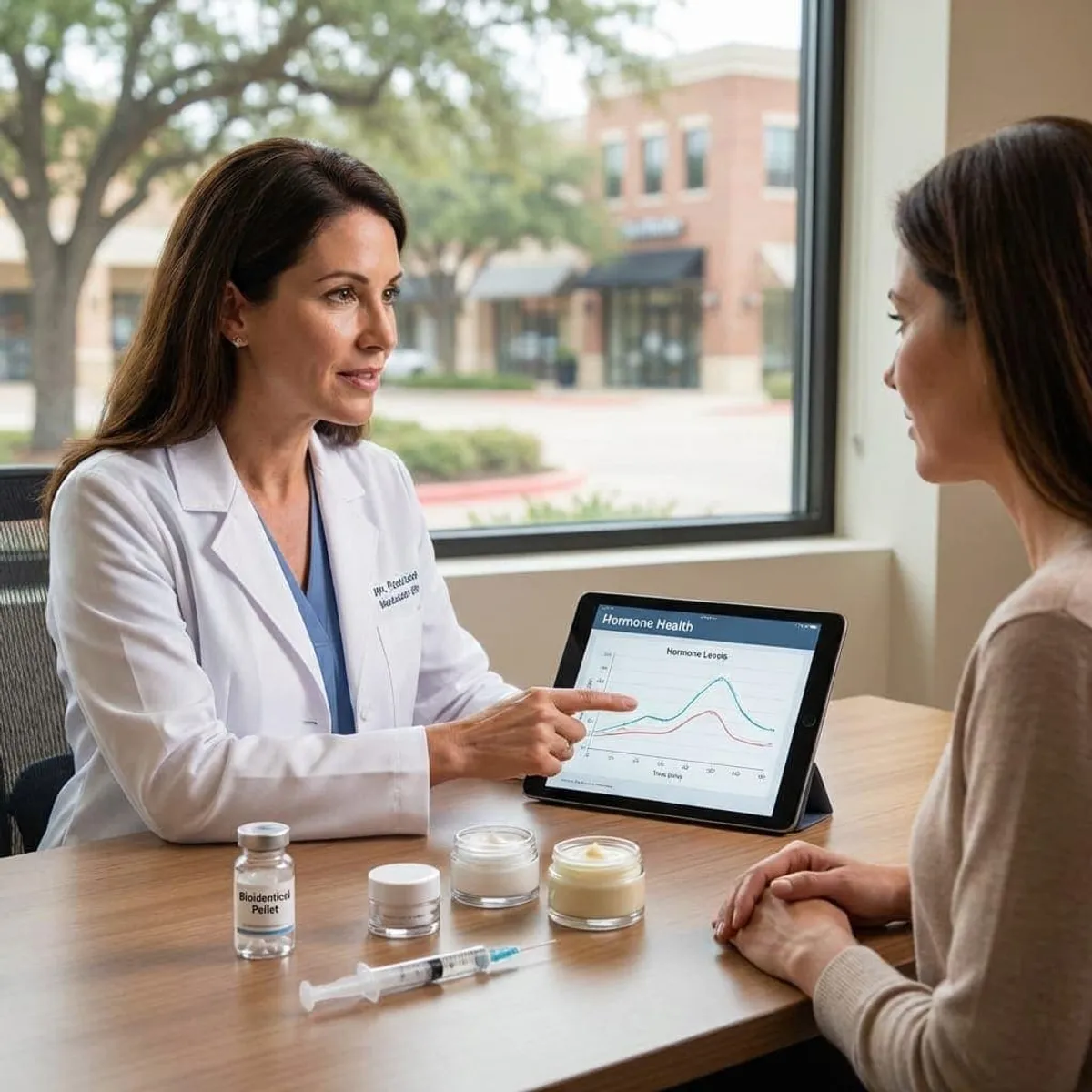
Bioidentical Hormone Replacement Therapy: The Gold Standard We Provide
When hormones shift, life changes. Whether you’re navigating menopause, experiencing energy crashes, or noticing changes in muscle tone and mood, hormone imbalance affects how you feel every single day. The challenge isn’t just recognizing the problem. It’s finding HRT options that actually work for your body and your life.
Here in Southlake and across the DFW area, we’re seeing more adults than ever seeking hormone replacement therapy. The good news: modern HRT has evolved dramatically. The better news: not all approaches are created equal. At Medrein Health and Aesthetics, we’ve built our hormone replacement practice around one core principle: individualized medicine, guided by science, delivered with transparency.
Let me walk you through the five best HRT options available to you, and show you exactly how our approach differs.
Bioidentical hormone replacement therapy (BHRT) uses hormones that are molecularly identical to what your body naturally produces. This matters far more than many realize.
We use bioidentical HRT because the science supports it. When your body receives hormones with the exact same chemical structure as your own estradiol, progesterone, or testosterone, your cellular receptors recognize them immediately. There’s no guesswork, no synthetic surprises, just your body operating at its intended hormonal level.
Many conventional clinics still default to synthetic hormones or conjugated estrogens derived from pregnant mare urine. Those products work for some, but they’re not optimized for how your unique biology functions. We compounded our bioidentical formulations based on individual lab testing, meaning your dose is crafted specifically for you, not a generic prescription applied to every patient.
The practical difference: patients on our bioidentical protocols typically report fewer side effects, more stable energy levels, and faster symptom relief compared to traditional synthetic HRT. Results may vary.
What to do next: Request bloodwork before your first visit. This baseline tells us exactly what your hormone levels are right now, which guides every treatment decision we make.
Hormone Pellet Therapy: Long-Acting Solutions We Specialize In
Hormone pellet therapy delivers consistent, sustained hormone release without the daily pill burden or weekly injections. We’re strong advocates because the clinical outcomes speak for themselves.
A tiny pellet, about the size of a grain of rice, is placed subcutaneously (just under the skin, usually in the hip area) during a brief in-office procedure. Over three to six months, it releases bioidentical hormones at a steady rate that mimics your body’s natural rhythm. No peaks and valleys. No missed doses. No remembering to take medication.
Patients in Grapevine, Keller, Colleyville, and across our Southlake practice love this approach because the consistency minimizes the hormonal fluctuations that trigger hot flashes, mood swings, or energy crashes. We’ve had women report that this single change restored their sleep quality and sexual function after years of struggle.
The pellet approach also simplifies monitoring. Because hormone delivery is consistent, we can assess your bloodwork at fixed intervals and adjust only when needed, rather than chasing dose corrections month after month.
What to do next: Discuss timeline with our team. If you prefer something with longevity and predictability, pellet therapy typically shows full effects by week four, with benefits lasting three to six months depending on metabolism. Results may vary.
Injectable Hormone Treatments: Precision Dosing at Our Clinic
For patients who want flexibility or need faster adjustments, our injectable hormone treatments offer precision control that pills and pellets can’t match.
Injectable hormones (typically testosterone or estradiol) are administered by intramuscular injection on a schedule that we customize based on your response. Weekly or biweekly dosing gives us the ability to fine-tune your hormone levels quickly. If you’re not responding optimally, we adjust within days, not months.
This approach works exceptionally well for patients in Trophy Club, Westlake, and across the DFW corridor who travel frequently or prefer clinical oversight at regular intervals. The injection itself takes under a minute, and many patients learn to self-administer at home after their first visit.
We monitor your labs every 6 to 8 weeks initially, then adjust the protocol based on your bloodwork and how you’re feeling. That responsiveness and agility are what set injectable therapy apart when you need results on a tighter timeline.
What to do next: If you value control and frequent adjustments, ask about our injectable protocols during your consultation. We’ll show you the injection technique and discuss whether home administration or in-office visits align better with your schedule.
Traditional Synthetic HRT: Why We Choose Better Alternatives
We don’t shy away from honesty: traditional synthetic HRT (like conjugated equine estrogens or medroxyprogesterone) has a place in medicine, but it’s not our first recommendation, and here’s why.
| Feature | Bioidentical HRT | Traditional Synthetic HRT | |
|---|---|---|---|
| Hormone structure | Molecularly identical to your body's own hormones | Lab-created structure that differs from your body's own hormones | |
| Dosing approach | Compounded based on your individual lab testing | Standard dosing, not individualized | |
| Reported side effects | Fewer reported side effects for most patients | Higher rates of headaches, breast tenderness, mood changes, and elevated clotting risk in some populations | |
| Upfront cost | Reflects individualized compounding | Lower upfront cost, often offset by follow-up visits for side effect management |
Results may vary.
Synthetic hormones are created in a lab and don’t match your body’s native hormone structure. Your receptors have to work harder to process them, which means higher rates of reported side effects: headaches, breast tenderness, mood changes, and elevated clotting risk in some populations. The Women’s Health Initiative study in the early 2000s raised legitimate concerns about synthetic HRT safety, and while newer research is more nuanced, the pattern is clear: bioidentical options deliver better tolerability for most patients.
We’ve also found that patients on synthetic protocols need more frequent dose adjustments and often report longer adjustment periods. They cost less upfront, which explains why they remain common, but the cost savings evaporate when you factor in office visits for side effect management and protocol tweaks.
Our philosophy is straightforward: if we can match your body’s natural hormone chemistry precisely, why settle for something that creates friction in your biology?
What to do next: If you’re currently on synthetic HRT and experiencing side effects, let’s discuss a transition to bioidentical therapy. Many patients see dramatic improvement within 4 to 6 weeks. Results may vary.
Customized Hormone Monitoring: Our Physician-Supervised Advantage
The difference between a good HRT program and an excellent one often comes down to monitoring. We treat this as the third pillar of care, equally important as the hormone type and delivery method.
Our physician-supervised approach means that Dr. Mikki or our hormone specialists review your bloodwork, listen to your symptom updates, and adjust your protocol before problems escalate. We’re not running a mail-order pharmacy; we’re actively managing your hormonal health.
We test not just your primary hormones (estrogen, progesterone, testosterone) but also thyroid function, cortisol, prolactin, and metabolic markers. Why? Because hormones don’t exist in isolation. A sluggish thyroid can sabotage your energy despite optimal estrogen levels. High cortisol can block weight loss even on optimal HRT. We see the whole system.
Patients across Southlake and the surrounding areas appreciate that we schedule follow-ups at logical intervals, not random ones. Initial follow-up is typically three weeks in (early symptom check), then six weeks (first lab draw), then quarterly once you’re stable. This rhythm catches problems early and prevents the frustration of months-long waits to see if your dose is working.
What to do next: Plan for quarterly check-ins once your protocol is established. Bring a symptom journal to each visit: energy levels, sleep quality, mood, any changes. This real-world feedback guides our decisions more than bloodwork alone.
HRT for Women: Addressing Menopause and Hormonal Decline Our Way
Menopause isn’t a disease; it’s a life transition. But that doesn’t mean you have to white-knuckle through hot flashes, brain fog, and sleep disruption for a decade.
We approach HRT for women with a focus on symptom relief balanced against long-term health. Yes, we restore estrogen and progesterone to ease the vasomotor symptoms (hot flashes and night sweats). But we’re equally focused on bone density, cardiovascular health, cognitive function, and sexual vitality. These aren’t separate concerns. They’re interconnected.
Our bioidentical protocol for perimenopausal and postmenopausal women typically includes micronized progesterone (which actually supports sleep and mood, unlike synthetic progestins) alongside estradiol in a form and dose matched to your baseline bloodwork. We also routinely evaluate progesterone metabolites and adjust ratios based on individual response.
Many women tell us they’ve waited years for relief, trying over-the-counter supplements or white-knuckling through symptoms they assumed were “just part of aging.” The transformation when they finally access proper HRT is remarkable. Within weeks, sleep improves. Within a month, brain fog lifts. By month three, most women report they feel like themselves again. Results may vary.
What to do next: Schedule a comprehensive hormone panel if you’re experiencing menopausal symptoms. We’ll map your current hormone landscape and create a phased plan to restore vitality without guesswork.
HRT for Men: Testosterone Optimization Through Expert Care
Men rarely discuss hormone decline openly, which means most cases go untreated. That’s a missed opportunity for profound quality-of-life improvement.
Testosterone naturally declines about 1% per year after age 30. By 50, many men sit well below optimal ranges, experiencing fatigue, reduced muscle mass, declining sexual function, mood changes, and slower recovery from exercise. They assume this is “just aging.” It’s not. It’s treatable.
Our testosterone optimization protocol for men starts with comprehensive testing: total testosterone, free testosterone, DHT (dihydrotestosterone), estradiol, and a full metabolic panel. We’re not just chasing a number; we’re optimizing your entire hormonal ecosystem. Some men need testosterone replaced. Others need estrogen management (excess aromatization). Some benefit from peptide therapy alongside TRT to maximize muscle recovery and sexual function.
We also educate men on the importance of ongoing monitoring. Testosterone therapy requires vigilance around hematocrit (red blood cell count), prostate health, and cardiovascular markers. We do this work regularly, preventing problems before they emerge.
Ongoing Safety Monitoring
Testosterone therapy requires regular monitoring of hematocrit (red blood cell count), prostate health, and cardiovascular markers throughout treatment, not just at the start. This ongoing vigilance is part of physician-supervised testosterone optimization, not an optional add-on.
Patients in Keller, Westlake, and across DFW consistently report that optimized testosterone gives them back their vitality: better gym performance, sharper mental clarity, restored sexual confidence, and genuine mood elevation. Results may vary.
What to do next: If you’re over 40 and feeling fatigued or noticing body composition changes, don’t attribute it all to “getting older.” Get your testosterone tested. You might be surprised at the opportunity in front of you.
Combining HRT with Peptide Therapy: Our Comprehensive Longevity Approach
HRT restores your baseline hormone levels. Peptide therapy pushes your biology forward. At Medrein Health, we often combine both for optimal outcomes, especially for patients seeking comprehensive rejuvenation.
Peptides are short chains of amino acids that signal your body to produce more of its own beneficial compounds: growth hormone, collagen, improved metabolism. When layered with HRT, peptides accelerate recovery from exercise, improve body composition, enhance skin quality, and amplify energy and mental clarity.
Picture a woman at 52 who’s been through menopause without support. She starts bioidentical HRT and feels 80% better. Then we add a peptide protocol targeting collagen synthesis and metabolic optimization. Suddenly her skin improves, her energy soars, and her body composition shifts even without aggressive dieting. Results may vary. The combination is synergistic.
Similarly, men on testosterone therapy who add peptide therapy for growth hormone secretion see accelerated muscle gain, faster recovery, and improved sexual function beyond testosterone alone.
This is where modern medicine diverges from traditional approaches. We’re not just replacing what you’ve lost; we’re optimizing what you have.
What to do next: Ask about peptide therapy options during your hormone consultation. Not every patient needs it, but for those pursuing comprehensive vitality, it’s a powerful complement to HRT.
Lab Work and Ongoing Assessment: How We Ensure Your Success
We treat bloodwork as a conversation, not a checkbox. Initial labs tell us where you are. Follow-up labs tell us where you’re going. Trending labs tell us if your protocol is working or needs adjustment.
Our standard protocol includes baseline testing of:
- Total and free testosterone, DHT, DHEA-S
- Estradiol, progesterone, FSH, LH
- Prolactin, thyroid panel (TSH, T3, T4)
- Cortisol rhythm
- Lipid panel and metabolic markers
- Complete blood count
Then we retest at 6 weeks, 12 weeks, and quarterly thereafter. We’re looking for three things: (1) Are hormone levels in your target range? (2) Are you feeling better? (3) Are any downstream markers (lipids, glucose, liver function) trending well?
If bloodwork looks optimal but you’re still symptomatic, we adjust. If you’re feeling great but a marker is drifting in a concerning direction, we adjust. It’s evidence-informed medicine with your lived experience as the primary guide.
Many clinics order labs once and assume you’ll stay on that dose indefinitely. We don’t. Metabolism changes. Life stress changes. Medications change. Your protocol should evolve with you.
What to do next: Commit to the full testing schedule. Initial resistance to regular bloodwork usually evaporates once patients see how precise monitoring accelerates their results.
Why Medrein Health Delivers Superior HRT Results in the DFW Area
We’re confident in our outcomes because we’ve removed the variables that plague typical HRT programs. We use bioidentical hormones, customize dosing based on individual bloodwork, employ flexible delivery methods (pellets, injections, or pharmaceuticals), and monitor relentlessly.
But the real difference is physician oversight. Dr. Mikki and our hormone specialists actively guide your care, not a nurse practitioner who sees you once and a pharmacy that mails refills. You have a dedicated team accountable for your results.
We also integrate HRT with our broader aesthetic and wellness offerings. If you’re optimizing hormones, why not address skin quality, body composition, and overall vitality comprehensively? Many patients come for HRT and discover that adding laser skin resurfacing, medical weight loss, or peptide therapy creates a synergistic transformation they didn’t anticipate.
For patients in Southlake, Grapevine, Colleyville, Trophy Club, Westlake, and across the DFW metroplex, we offer something rare: genuine expertise, transparent communication, and a genuine commitment to your long-term health.
The question isn’t whether HRT can help you. Modern evidence shows it can, when done right. The question is whether you’re ready to feel like yourself again: energized, clear-minded, vital, and confident in your body.
Schedule your comprehensive hormone evaluation today at medreinhealth.com. Let’s create a customized HRT plan that restores your vitality and aligns with your health goals. Your best self is waiting.
Call us today to schedule your consultation with Dr. Mikki!
Frequently asked questions
What makes bioidentical HRT different from traditional synthetic hormone replacement?
We use bioidentical hormones because they’re molecularly identical to the hormones your body naturally produces, which typically means better tolerability and more predictable results. Results may vary. Our physician team monitors how your body responds and adjusts dosing individually, rather than applying a generic protocol that many clinics use with synthetic alternatives.
How often will I need lab work and follow-up appointments while on HRT?
We typically begin with baseline labs to understand your current hormone levels, then recheck after 4-6 weeks to see how you’re responding to treatment. After we establish your optimal dosing, our patients usually come in for routine assessment every 3-6 months, though we customize this schedule based on your specific needs and treatment type.
Can I combine hormone replacement therapy with other treatments at your clinic?
Absolutely. We frequently pair HRT with peptide therapy, laser skin treatments, and medical weight loss programs to create a comprehensive approach to your overall wellness and appearance. Our integrated care model means your physician team has full visibility into all your treatments, ensuring they work together safely and effectively.

About the author
Founder & Medical Director
Board-certified physician and founder of Medrein Health & Aesthetics in Southlake, and the physician who personally consults with you and performs most treatments herself.
Read full bio →Related Articles

Bioidentical vs Synthetic HRT: Which Improves Mood and Energy for Perimenopausal Women
Bioidentical vs synthetic HRT for mood and energy in perimenopause — Dr. Mikki at Medrein Health in Southlake compares both options for perimenopausal women.
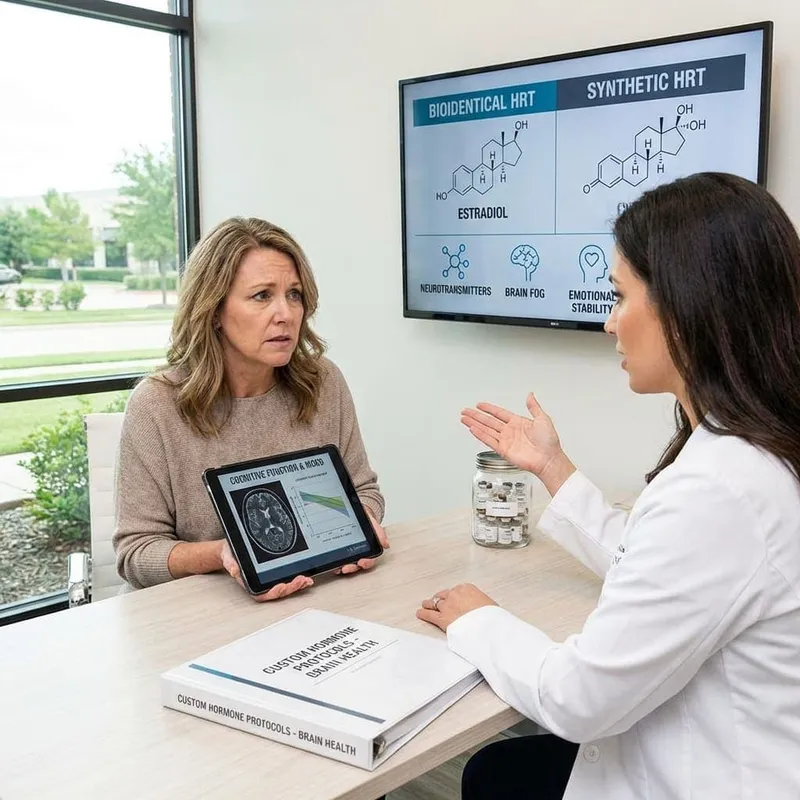
Bioidentical HRT vs Synthetic: How We Optimize Mood and Cognition in Perimenopause
Bioidentical vs synthetic HRT for mood and cognition in perimenopause. Medrein Health in Southlake personalizes hormone therapy to support mental clarity.

Bioidentical vs Synthetic HRT: Safety, Side Effects, and Long-Term Monitoring at Medrein
Compare bioidentical and synthetic HRT: safety, side effects, and long-term monitoring with Dr. Mikki at Medrein Health in Southlake. Physician-led HRT in DFW.