Bioidentical HRT vs Synthetic: How We Optimize Mood and Cognition in Perimenopause
On this page
The Perimenopause Brain Fog Crisis: Why Standard Care Falls Short
When women in our Southlake practice describe perimenopause, they rarely mention just hot flashes. The conversation almost always turns to the brain fog, the mood swings, the sudden anxiety that wasn’t there before. These cognitive and emotional shifts are real, measurable, and deeply connected to how hormones are changing in your body. The problem we see frequently is that standard synthetic hormone replacement doesn’t address the root cause of these neurological symptoms, leaving our patients frustrated despite taking medication.
At Medrein Health & Aesthetics, we’ve built our bioidentical HRT program around a fundamental truth: what matters isn’t just replacing hormones, it’s replacing them with molecules your brain actually recognizes and uses efficiently. Over the past years of working with women across the DFW area, we’ve seen dramatic cognitive and emotional improvements when we shift from synthetic to bioidentical approaches paired with proper medical supervision. The difference isn’t subtle.
Brain fog during perimenopause isn’t a psychological symptom or a sign you’re losing your mind. It’s a neurobiological event. Your estrogen and progesterone levels are fluctuating wildly, and your brain relies on these hormones to maintain neurotransmitter balance, regulate blood sugar metabolism, and protect mitochondrial function in neurons.
Standard synthetic hormone therapy often uses the same standard doses for every patient, without accounting for individual baseline levels, metabolism, or genetic differences in how your body processes hormones. Many women we meet have tried conjugated estrogens like Premarin (which is derived from horse urine) or medroxyprogesterone acetate (Provera, a synthetic progestin). While these drugs technically replace missing hormones, they don’t bind to your receptors the same way your body’s natural hormones do.
The result? Patients report that the cognitive fog persists, mood swings continue, and some experience new side effects like breast tenderness or bloating. We see this pattern repeatedly in consultations with women from Colleyville, Westlake, and Keller who’ve been on synthetic therapy for months without relief.
What we’ve learned is that cognitive symptoms during perimenopause respond better to hormones that are molecularly identical to what your ovaries naturally produced. That’s where bioidentical HRT becomes a game-changer.
How Synthetic vs Bioidentical Hormones Affect Your Neurotransmitters Differently
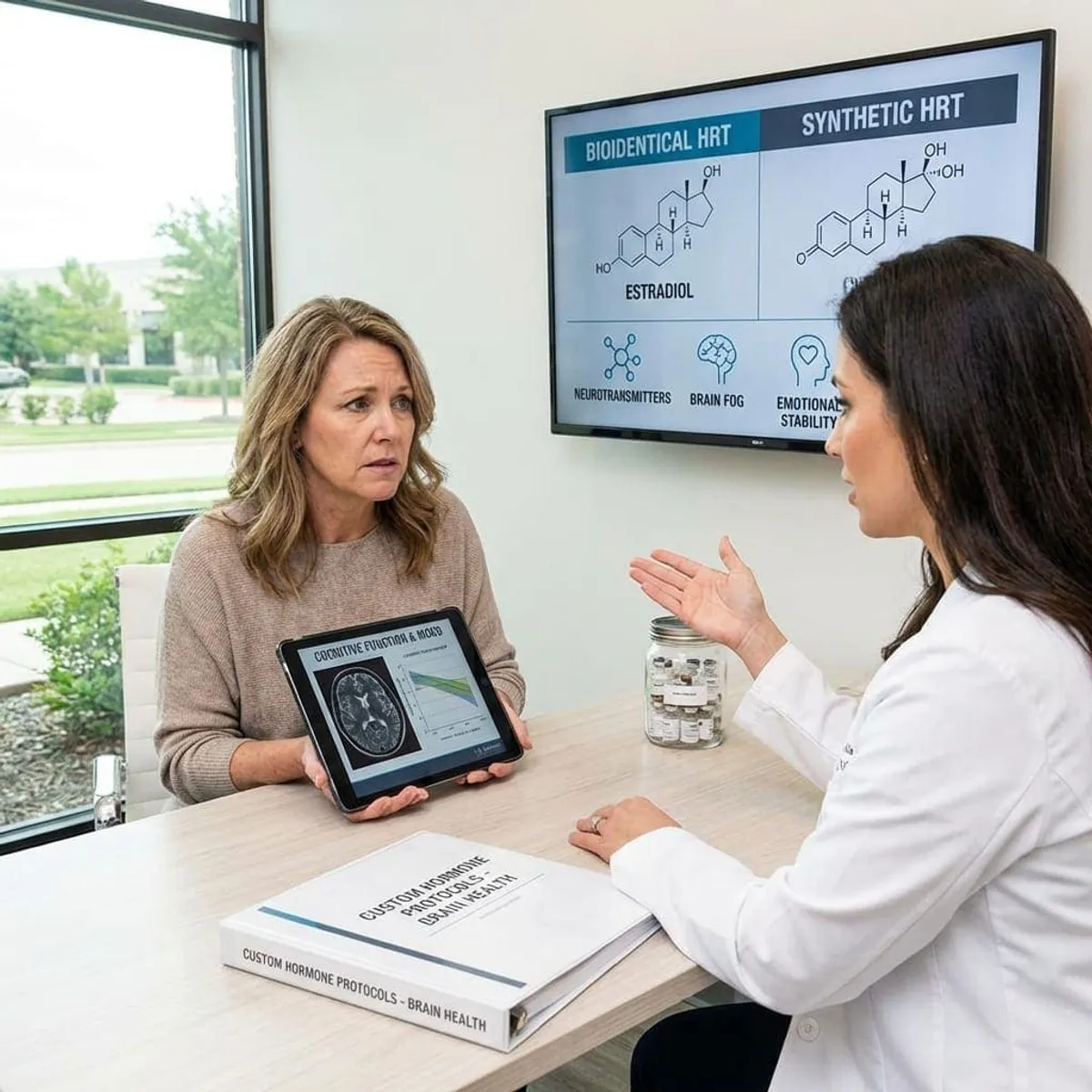
The chemical difference between synthetic and bioidentical hormones is significant for your brain. Your estrogen receptors, dopamine pathways, and GABA receptors don’t just recognize “any hormone.” They recognize specific molecular shapes.
Bioidentical hormones have the exact same molecular structure as the estradiol, progesterone, and testosterone your body naturally made. This means they fit into your hormone receptors like a key into a lock, activating the same neural pathways your brain evolved to use. Synthetic hormones, by contrast, have slightly different structures. They’re close enough to provide some benefit, but they activate your receptors with lower efficiency and sometimes trigger different cascading effects.
Here’s the practical difference we see in our patients:
- Estradiol (bioidentical) enhances serotonin receptor sensitivity and supports GABA production, which helps mood regulation and anxiety control
- Medroxyprogesterone (synthetic progestin) binds to progesterone receptors less selectively and can activate androgen and glucocorticoid receptors, sometimes worsening anxiety
- Bioidentical progesterone is a natural anxiolytic (anxiety-reducing) agent that supports sleep and stabilizes mood
- Synthetic progestins often disrupt sleep architecture and can contribute to mood instability
| Feature | Bioidentical Hormones | Synthetic Hormones |
|---|---|---|
| Receptor binding | Identical molecular structure activates receptors the way your brain evolved to use | Slightly different structure activates receptors with lower efficiency and can trigger different cascading effects |
| Progesterone / progestin effects | Natural anxiolytic effect that supports sleep and stabilizes mood | Can disrupt sleep architecture and contribute to mood instability |
We measure this through symptom tracking and sometimes through saliva or serum hormone testing, allowing us to see whether your treatment is actually normalizing your neurochemical environment. With synthetic hormones, we often see patients improving on paper (hormone levels look normal) but feeling no better emotionally or cognitively. Bioidentical approaches correct this disconnect.
The Mood Connection: Why Bioidentical HRT Produces Superior Emotional Stability
Perimenopause is a major risk window for depression, anxiety, and emotional dysregulation. The reason lies in how estrogen influences your serotonin and dopamine systems. As estrogen drops unpredictably during perimenopause, your serotonin receptor sensitivity plummets, making you vulnerable to mood crashes even if your life circumstances haven’t changed.
Bioidentical estradiol restores that serotonin sensitivity more effectively than synthetic alternatives because it binds more robustly to estrogen receptors in the limbic system, the emotional center of your brain. Progesterone, particularly when bioidentical, acts as a GABA agonist, meaning it amplifies the calming effects of your brain’s natural anxiety-reducing neurotransmitter.
In our clinic, we’ve tracked mood stability using simple symptom journals with dozens of women from Trophy Club, Grapevine, and throughout the DFW region. The pattern is consistent: women on bioidentical HRT report mood stabilization within 2-4 weeks, with continued improvement over 8-12 weeks. Women who switch from synthetic to bioidentical often describe the shift as sudden clarity, as though a filter has lifted.
One of our patients from Keller shared that after three months on synthetic HRT, she still experienced daily irritability and tearfulness. Within six weeks of switching to our bioidentical protocol, her mood stabilized so completely she didn’t recognize herself in the best possible way. That’s the cognitive-emotional shift we’re targeting. Results may vary.
Cognition and Memory During Perimenopause: What the Science Shows
Memory problems and difficulty concentrating during perimenopause stem from how estrogen supports memory encoding and hippocampal function. The hippocampus, your brain’s learning and memory center, is densely populated with estrogen receptors. When estrogen drops suddenly, this region becomes vulnerable to impaired glucose metabolism and reduced neuroplasticity.
Bioidentical estradiol therapy restores hippocampal function more effectively than synthetic alternatives. Research comparing bioidentical and synthetic HRT shows that bioidentical therapy produces greater improvement in verbal memory, processing speed, and executive function. The mechanism involves better mitochondrial support in neurons and improved cerebral blood flow. Results may vary.
We also consider how progesterone affects sleep, because sleep quality is inseparable from cognitive function. Bioidentical progesterone improves sleep architecture in ways synthetic progestins often don’t, meaning you spend more time in deep, restorative sleep stages. Better sleep equals better memory consolidation and clearer cognition the following day.
Our approach includes careful timing of dose administration. Evening progesterone dosing maximizes sleep support, while estradiol timing accounts for your individual absorption patterns. This isn’t something cookie-cutter therapy can accomplish.
Our Physician-Supervised Approach to Bioidentical HRT Optimization
We design every bioidentical HRT protocol around baseline testing and close clinical monitoring. This is how we differ fundamentally from a one-time prescription and goodbye model.
Baseline Testing and Consultation
Our process starts with comprehensive hormone testing, including salivary cortisol patterns, baseline estradiol, progesterone, and testosterone levels. We also assess your symptom severity, personal risk factors for bone loss or breast concerns, and any medication interactions. For patients across the DFW area, we often conduct this work during a consultation at our Southlake clinic, though we can arrange testing coordination by phone for established patients.
Personalized Protocol Design
Next, we create a starting protocol based on your baseline levels and symptom profile. Bioidentical hormones typically come in several delivery forms: transdermal patches (which bypass liver metabolism and provide steady hormone delivery), sublingual tablets, topical creams, or vaginal preparations. We select the delivery method that best suits your body's absorption patterns and your daily schedule.
Ongoing Monitoring and Adjustment
Then comes the critical part: ongoing monitoring and adjustment. We schedule follow-up appointments at 4-6 weeks, 12 weeks, and 6 months to track symptom resolution, cognitive improvement, mood stability, and any emerging side effects. If you're not seeing cognitive improvement by week 6, we adjust dosing or delivery method. If new symptoms appear, we investigate whether they're related to hormone levels or other factors.
This hands-on, iterative approach takes more time and attention than standard care, but it’s why our patients consistently report better outcomes for brain health specifically.
Custom Hormone Protocols We Design for Your Brain Health
Bioidentical doesn’t mean the same protocol for everyone. We customize protocols based on your unique symptom pattern, baseline hormone levels, metabolic factors, and even genetic variations in how you process hormones.
For patients experiencing primarily brain fog and memory issues, we often emphasize transdermal estradiol at slightly higher physiologic levels, because transdermal delivery provides steadier hormone availability and better hippocampal penetration. For those struggling with anxiety and insomnia, we prioritize bioidentical progesterone support, often using a higher evening dose.
Some patients benefit from testosterone supplementation, particularly if they’re experiencing cognitive slowing or low motivation alongside other perimenopause symptoms. Bioidentical testosterone in appropriate doses can enhance dopamine function and improve processing speed and decisiveness.
We also consider your liver’s capacity to process hormones. Certain genetic variations affect estrogen metabolism. If you’re a slower metabolizer, we use lower transdermal doses. If you’re a faster metabolizer, oral or vaginal routes might provide better hormone stability. This level of personalization is what elevates outcomes.
The protocols we design are documented in your chart, adjusted at each visit based on your feedback, and explained to you in detail so you understand why we’re making each change. You’re not passively taking medication; you’re actively participating in optimizing your brain chemistry.
Combining HRT with Our Peptide and Wellness Programs for Complete Support
Brain health during perimenopause isn’t entirely about hormone replacement. It’s also about supporting neuroplasticity, protecting against inflammation, and optimizing the metabolic foundations that allow your brain to function optimally.
We frequently combine bioidentical HRT with peptide therapy, particularly GLP-1 peptides for metabolic support and Semorelin for enhanced cognitive function and neuroprotection. Peptides like BPC-157 have shown promise in supporting neurological resilience during hormonal transitions. For our patients specifically concerned about mood and cognition, this layered approach produces superior results.
We also coordinate your HRT with our wellness programs: optimization of sleep hygiene, targeted supplementation for brain health (like omega-3s, magnesium, and B vitamins), stress resilience coaching, and appropriate exercise protocols. Cardiovascular exercise particularly enhances the cognitive benefits of bioidentical HRT by increasing cerebral blood flow and supporting neurogenesis.
This comprehensive model means you’re not just replacing hormones; you’re building a foundation of brain health that will sustain you through perimenopause and beyond. Patients report that the combination of bioidentical HRT plus lifestyle optimization and peptide support produces cognitive clarity they haven’t experienced in years.
What to Expect: Timeline for Mood and Cognitive Improvement
We’re honest with our patients about realistic timelines because managing expectations prevents disappointment and helps us know if something isn’t working as intended.
In the first 2-3 weeks on bioidentical HRT, most patients report reduced hot flashes and initial mood stabilization. Anxiety often decreases noticeably within this window because progesterone and estradiol begin restoring GABA function quickly.
By week 4-6, cognitive improvements become more apparent. Memory retrieval speeds up, brain fog begins clearing, and focus during work or conversation improves. Sleep quality typically deepens, which amplifies daytime cognition further.
Weeks 8-12 represent the period of maximal cognitive improvement. Patients describe themselves as thinking “normally” again, without the effort it took to concentrate during peak perimenopause. Mood becomes stable and predictable. Energy improves because better sleep and stable neurotransmitters support sustained wakefulness and motivation.
Beyond 12 weeks, continued refinement occurs. We adjust dosing or delivery methods based on your response, fine-tuning the protocol for maximum benefit with minimal side effects.
Some patients reach optimal symptom relief within 8 weeks; others take 16-20 weeks as we dial in the exact protocol that works for their unique physiology. This isn’t a failure; it’s precisely why personalized medicine works better than algorithmic prescribing. Results may vary.
Why Our DFW Patients Choose Bioidentical Therapy Over Synthetic Alternatives
Women throughout Dallas, Fort Worth, Southlake, Colleyville, Westlake, Keller, Grapevine, and Trophy Club choose our bioidentical approach because they experience results that synthetic hormone therapy simply didn’t deliver. The feedback is consistent: cognitive clarity, emotional stability, and renewed sense of self.
But the choice to pursue bioidentical HRT goes deeper than just symptom relief. Many of our patients tell us they appreciate being treated as individuals rather than conditions. They value our commitment to education over pressure, to transparency over marketing. We explain the mechanisms behind every treatment decision, share honest information about both benefits and realistic limitations, and genuinely invest in finding the protocol that works for your specific brain chemistry.
We also believe that perimenopause is an opportunity, not a crisis. Yes, hormones are dropping, but with proper bioidentical HRT and comprehensive support, this life stage can be a moment of renewal. Your brain can function better, your mood can stabilize, and your sense of vitality can actually improve compared to your perimenopause baseline.
If you’re experiencing brain fog, memory issues, mood instability, or cognitive changes during perimenopause, we invite you to schedule a consultation at Medrein Health & Aesthetics. We’ll conduct thorough hormone testing, listen carefully to your symptom experience, and design a bioidentical HRT protocol specifically optimized for your brain health and overall vitality. Let’s restore your clarity and emotional balance together.
Call us today to schedule your consultation with Dr. Mikki!
Frequently asked questions
How quickly will I notice improvements in my mood and cognitive function after starting bioidentical HRT?
Most of our patients begin experiencing mood stabilization within 2 to 4 weeks, with noticeable improvements in brain fog and mental clarity following around 6 to 8 weeks as their hormone levels optimize. We monitor your individual response closely during this timeline because everyone's neurochemistry is different, and we adjust your protocol as needed to support sustained cognitive and emotional gains. Results may vary.
What's the key difference between how bioidentical and synthetic hormones affect my brain chemistry?
Bioidentical hormones match your body's natural molecular structure, so they interact with your neurotransmitter receptors more precisely and reduce inflammatory responses in the brain that synthetic versions can trigger. This means we can achieve mood stabilization and cognitive support with better tolerability and fewer side effects, since your brain recognizes and processes bioidentical hormones as it would your own natural production.
Can I combine bioidentical HRT with other treatments at your practice to enhance my results?
Absolutely, and we actually recommend it for many patients. We frequently pair HRT optimization with our peptide therapy and targeted wellness programs to address brain health from multiple angles, accelerate cognitive improvements, and support sustained emotional resilience throughout perimenopause and beyond.

About the author
Founder & Medical Director
Board-certified physician and founder of Medrein Health & Aesthetics in Southlake, and the physician who personally consults with you and performs most treatments herself.
Read full bio →Related Articles

Bioidentical vs Synthetic HRT: Safety, Side Effects, and Long-Term Monitoring at Medrein
Compare bioidentical and synthetic HRT: safety, side effects, and long-term monitoring with Dr. Mikki at Medrein Health in Southlake. Physician-led HRT in DFW.
Top 7 Safe HRT Monitoring Practices for Managing Low Testosterone in Men
See the 7 monitoring practices that keep testosterone replacement therapy safe for men: baseline labs, follow-up intervals, liver, heart, and prostate checks.

Top 7 Benefits of Bioidentical HRT for Perimenopause Mood and Cognitive Health
7 benefits of bioidentical HRT for perimenopause mood and cognitive health. Dr. Mikki at Medrein Health in Southlake explains what to expect from treatment.