PDO Thread Lifts vs Surgical Facelift: The Better Choice for Natural Facial Rejuvenation
On this page
Why Our Patients Are Choosing PDO Threads Over Traditional Surgery
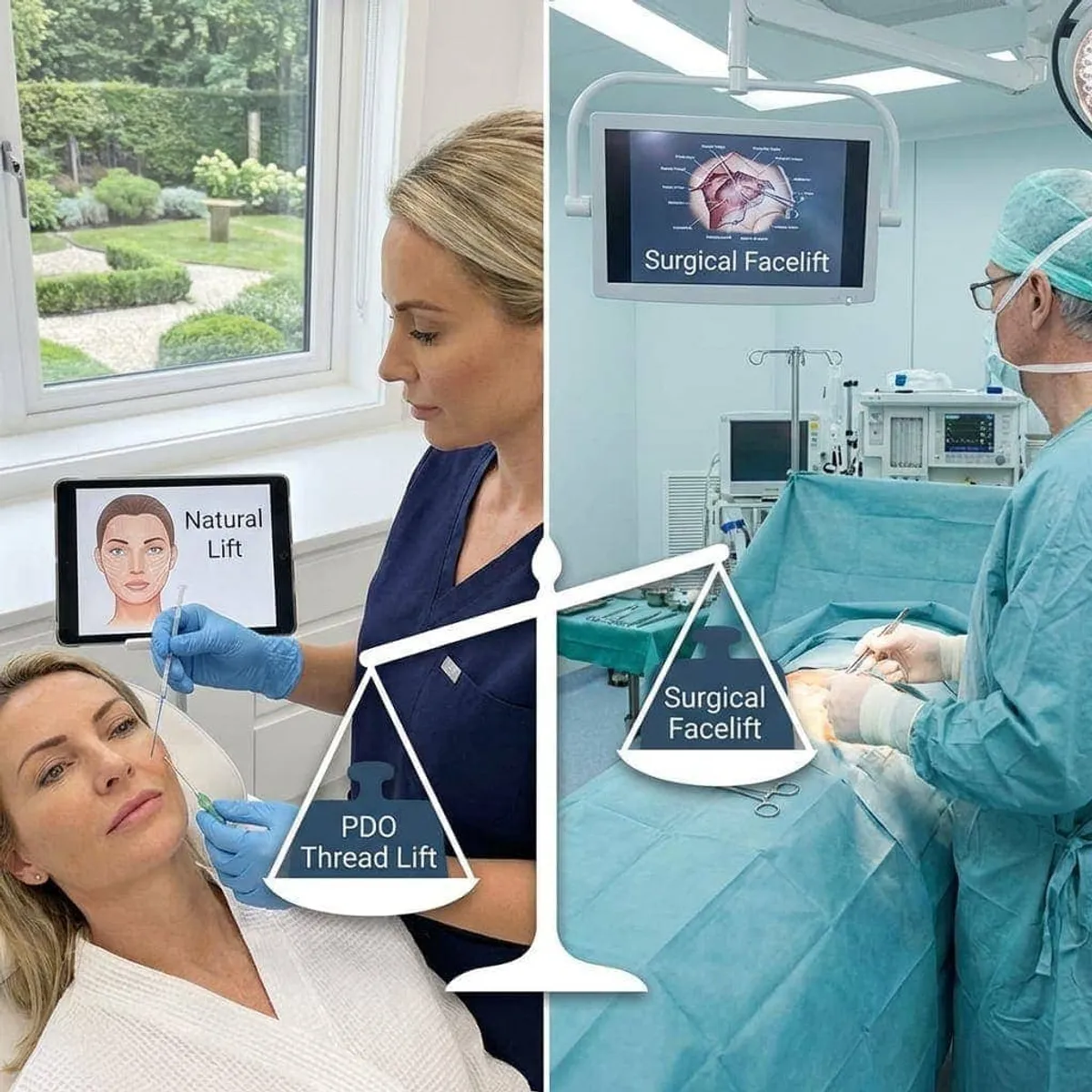
If you’re considering facial rejuvenation, you’ve likely heard about surgical facelifts as the “gold standard.” But the landscape has shifted dramatically in recent years. At Medrein Health & Aesthetics in Southlake, we’re seeing more patients than ever choose PDO thread lifts over traditional surgery, and the reasons are compelling. We’ll walk you through how these two approaches compare so you can make an informed decision about what’s right for your goals and lifestyle.
The shift toward thread lifts reflects a fundamental change in how people think about aging. Our patients want visible results without disappearing from their lives for weeks of recovery. They want natural-looking rejuvenation, not the “pulled” appearance that sometimes accompanies more aggressive surgical approaches. They also appreciate the financial flexibility and reduced risk profile.
What we hear most often is relief. When someone learns they can achieve meaningful lift and tightening without general anesthesia, surgical scars, or extended downtime, the decision becomes much clearer. Many of our Southlake and DFW patients tell us that thread lifts align with their values around health and longevity. Rather than invasive cutting and repositioning, we’re working with your body’s natural healing response to stimulate collagen and restore volume where it matters most.
The other driving factor is predictability. Surgical outcomes depend heavily on surgical technique, healing response, and sometimes revision procedures. Thread lifts offer more controlled, reproducible results with less guesswork involved.
How PDO Threads Work: The Science Behind Natural Lifting
PDO stands for polydioxanone, a biocompatible material that’s been safely used in medicine for decades, including in heart surgery and orthopedic procedures. When we place threads beneath the skin, they physically lift sagging tissue while simultaneously triggering your body’s collagen production.
Here’s what happens at a cellular level: the threads create a gentle mechanical lift immediately. Over the following weeks and months, your body recognizes the threads as something to heal around. This triggers fibroblasts (collagen-producing cells) to activate, creating a network of new collagen that further strengthens and tightens the skin. We’re essentially using your own healing response as the treatment mechanism.
The threads dissolve naturally over 6-8 months, but the collagen they stimulated remains. This is why results actually improve over time rather than diminishing immediately after the procedure. Results may vary. We can customize placement to target specific areas: jawline definition, cheekbone projection, temple softness, or overall facial contours.
The Real Cost Comparison: Threads Versus Surgical Facelifts
This is where numbers tell a stark story. A traditional facelift in the DFW area typically ranges from $8,000 to $15,000 or more, depending on extent and surgeon experience. When you factor in anesthesia fees, facility costs, and potential revision procedures, that number can climb significantly.
Our PDO thread treatments start at a fraction of that cost. Most patients invest between $1,500 and $3,500 for a comprehensive thread lift, depending on the areas treated and the number of threads required. The financial difference is substantial, but it goes deeper than just the procedure fee.
Consider the hidden costs of surgery: time off work (typically 2-3 weeks), potential childcare or household help during recovery, medications, and follow-up visits. Some patients need revision procedures within 5-10 years as tissues shift again. Thread lifts require no such hidden expenses.
For our patients in Grapevine, Keller, Colleyville, Westlake, and Trophy Club, this means the same results investment with significantly less financial burden. Many choose to reinvest those savings into complementary treatments that multiply their results.
Recovery Time and Downtime: Getting Results Without Disrupting Your Life
Here’s the practical reality: after a thread lift, you walk out with minor redness and possibly some gentle swelling that resolves within 24-48 hours. You can return to normal activities immediately, though we recommend avoiding intense exercise or heavy lifting for about a week.
A surgical facelift is fundamentally different. You’ll need someone to drive you home and stay with you. You’ll have visible bruising and swelling for 1-2 weeks. You’ll wear compression garments. You’ll avoid bending over. You’ll have sutures to manage. Most people take 2-3 weeks completely off work, and full recovery takes 6-8 weeks.
The difference in life disruption is enormous. One of our favorite patient testimonials comes from a Southlake executive who had threads placed on a Friday morning and was back at the office Monday without anyone noticing she’d had anything done. That simply isn’t possible with surgical approaches.
We always recommend keeping activities light for the first week post-threads (no vigorous exercise, no facial massage), but you’re genuinely living your life during recovery. No hiding at home. No explaining procedures to colleagues.
Safety Profile: Why PDO Threads Carry Fewer Risks
Any procedure carries some risk, and we believe in complete transparency about this. Surgical facelifts involve general anesthesia, which carries its own set of risks including infection, blood clots, and adverse reactions. There’s also risk of nerve damage, asymmetry, and scarring that requires careful surgical technique to minimize.
PDO threads have a remarkably clean safety profile. Since the threads are placed through small needle insertions rather than incisions, infection risk is extremely low. The procedure uses local anesthesia only, avoiding anesthesia-related complications entirely. There are no external scars. Nerve injury is extraordinarily rare when performed by a skilled physician.
The most common side effects are minor: temporary bruising, slight swelling, or minimal tenderness at insertion points. These resolve within days. We’ve performed hundreds of thread treatments in our Southlake practice, and serious complications are virtually non-existent when the procedure is done correctly by a trained physician.
That said, this is why physician expertise matters. Threads should be placed by someone with deep understanding of facial anatomy. At our practice, every thread treatment is performed by our physician team who understand exactly where to position threads for optimal results and safety.
Immediate Lift Versus Waiting for Surgical Results
One significant advantage of threads is the immediate gratification. You’ll see and feel a lift within hours of the procedure. Your jawline appears more defined. Your cheekbones look higher. Sagging areas are supported. For many patients, this immediate change is deeply satisfying.
Surgical facelifts require patience. For the first 2-3 weeks, you’re too swollen to see actual results. As swelling gradually resolves over 6-8 weeks, you finally start to see what the procedure accomplished. The waiting period can be psychologically difficult, especially if you’re managing visible bruising during that time.
Then there’s the aesthetic outcome timing. Thread results continue improving over 3-6 months as collagen production peaks. Many patients report looking better at 4 months than at 4 weeks. Results may vary. Surgical results stabilize more quickly but then begin subtly changing over months as tissues settle into new positions. Sometimes this is positive; sometimes adjustments are needed.
For people who want to see results quickly and watch them improve progressively, threads offer a profoundly satisfying timeline. For people who prefer dramatic immediate change despite temporary swelling and bruising, surgery might appeal more. This is personal preference territory, and both are valid.
Longevity and Maintenance: What You Need to Know
Here’s what’s important to understand: PDO threads typically provide excellent results for 12-18 months, though this varies based on individual metabolism and the specific threads used. The threads themselves dissolve, but the collagen they stimulated remains, extending benefits beyond the threads’ presence. Results may vary.
Many of our patients choose to refresh threads every 12-18 months to maintain optimal results. This is considerably less frequent than anti-aging injections (which require touch-ups every 3-4 months), yet more frequent than surgery, which lasts 5-10 years on average.
Surgical facelifts do offer longer-lasting results because they physically reposition tissue. However, aging continues. Gravity and time persist. Many people who’ve had surgical facelifts find they want a refresher procedure within 5-10 years. Results may vary. So the comparison isn’t “threads once versus a surgery that lasts a lifetime.” It’s “threads every 12-18 months versus major surgery every 5-10 years.”
From a longevity perspective, threads give you flexibility. Your face continues aging naturally. You can adjust your treatment approach as your needs change. You’re never locked into one dramatic outcome. This appeals strongly to patients who want to age gracefully rather than pursuing one unchanging result.
| Feature | PDO Thread Lift | Surgical Facelift |
|---|---|---|
| Typical cost | $1,500-$3,500 | $8,000-$15,000+ |
| Anesthesia | Local anesthesia only | General anesthesia |
| Downtime | 24-48 hours of redness or mild swelling | 2-3 weeks off work; 6-8 weeks full recovery |
| Typical results duration | 12-18 months | 5-10 years |
Combining PDO Threads With Our Other Advanced Treatments
One of the advantages we emphasize at Medrein Health & Aesthetics is that threads complement virtually every other aesthetic treatment beautifully. Threads provide structural lift and tightening. But you can combine them with treatments that address skin quality, texture, and specific concerns.
Many of our patients pair threads with our Fotona 4D facelift for synergistic results. The Fotona delivers non-invasive skin tightening and rejuvenation from within, while threads provide external structural support. The combination creates a comprehensive facial transformation that looks natural and addresses multiple aging factors simultaneously.
Others combine threads with dermal fillers for strategic volume restoration in specific areas where threads alone need additional support. Some add microneedling to refine skin texture and minimize pores. The flexibility to layer treatments means you’re never compromising on any aspect of your appearance.
This customization is impossible with surgery. Once you’ve had a facelift, adding significant additional procedures isn’t practical for several years. Thread lifts, by contrast, work as part of a layered anti-aging strategy that evolves with your needs and goals.
Who Makes the Best Candidate for Thread Lift Treatment
Thread lifts work beautifully for people with mild to moderate skin laxity who want noticeable improvement without major surgery. Ideal candidates typically include those in their 40s to 60s experiencing early to moderate sagging, though we treat people across a wide age range.
The best candidates are people seeking natural-looking results rather than dramatic transformation. If you want a subtle lift that improves your appearance while still looking like you, threads are ideal. If you’re seeking extensive repositioning of multiple facial structures, surgery might address your goals more completely.
Is a PDO thread lift right for you?
We also look at skin quality and overall health. Patients with good skin elasticity respond beautifully to threads because their skin has robust collagen-building capacity. Those with significant sun damage might benefit from combining threads with laser treatments. People with certain medical conditions that affect healing need careful evaluation, which is why we perform comprehensive consultations.
During your consultation at our Southlake office, we assess your specific anatomy, discuss your goals honestly, and recommend what we genuinely believe will serve you best. Sometimes that’s threads. Sometimes it’s a different approach. Our job is to guide you toward the solution that matches your expectations and your lifestyle.
Why We Recommend PDO Threads as Your First Choice for Facial Rejuvenation
After years of helping patients in Southlake, Grapevine, Keller, Colleyville, Westlake, Trophy Club, and throughout the DFW area, we’ve seen the profound shift toward thread lifts, and we recommend them as the first choice for facial rejuvenation because they deliver on multiple fronts simultaneously.
Threads offer measurable lifting and tightening with immediate results that improve over months. They require no downtime, no general anesthesia, and no surgical risk. They cost a fraction of surgery. They work beautifully as part of a comprehensive anti-aging strategy. They provide flexibility to adjust and refresh as your needs evolve. And they trigger your body’s own collagen production, creating results that look natural because they are natural.
For most people considering facial rejuvenation, threads represent the sweet spot: meaningful, visible results without the disruption, risk, or expense of traditional approaches. They’re not right for everyone, and we’ll always be honest if a different approach better matches your specific situation. But for the majority of our patients seeking natural-looking rejuvenation they can enjoy immediately, thread lifts consistently deliver.
If you’re considering facial rejuvenation, we’d love to discuss your specific goals and show you how PDO threads might fit into a comprehensive approach tailored to you. Call us at 214-702-5225 or visit medreinhealth.com to schedule a consultation with our physician team. We’re here in Southlake and serving the surrounding DFW area, ready to help you look and feel your best.
Call us today to schedule your consultation with Dr. Mikki!
Frequently asked questions
What's the main difference between a PDO thread lift and a surgical facelift?
We use PDO threads to gently lift and tighten your skin by placing dissolvable threads under the surface, which stimulate your body's natural collagen production over time. A surgical facelift involves anesthesia, incisions, and significant tissue repositioning, making it a much more invasive procedure. Our thread lift patients enjoy visible lifting with minimal downtime, while surgical facelifts typically require weeks of recovery and carry higher risks associated with surgery.
How long do PDO thread lift results last, and will I need repeated treatments?
We typically see our patients maintain results for 12 to 18 months, depending on individual metabolism and how quickly their bodies absorb the threads. Most of our clients choose to schedule maintenance treatments annually or every 18 months to sustain their lifted appearance, though the collagen remodeling that continues after treatment provides some lasting benefit even after the threads dissolve. We can customize a timeline that works with your goals and budget.
Can I combine PDO threads with other treatments at your practice?
Absolutely, and we often recommend this approach for optimal results. We frequently pair thread lifts with our laser resurfacing, injectables, or microneedling treatments to address skin texture, volume loss, and fine lines all at once. Our physicians will discuss the best combination strategy during your consultation based on your specific concerns and desired outcome.

About the author
Founder & Medical Director
Board-certified physician and founder of Medrein Health & Aesthetics in Southlake, and the physician who personally consults with you and performs most treatments herself.
Read full bio →Related Articles
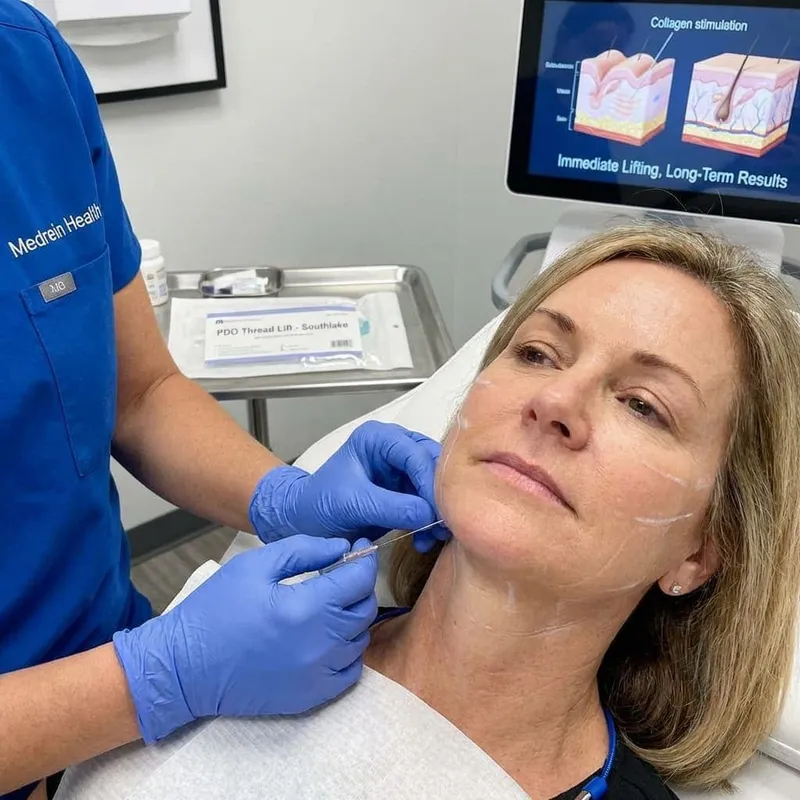
7 Best PDO Thread Lift Benefits for Non-Surgical Face and Neck Tightening
7 benefits of PDO thread lifts for non-surgical face and neck tightening. Dr. Mikki at Medrein Health in Southlake explains what threads do and who qualifies.
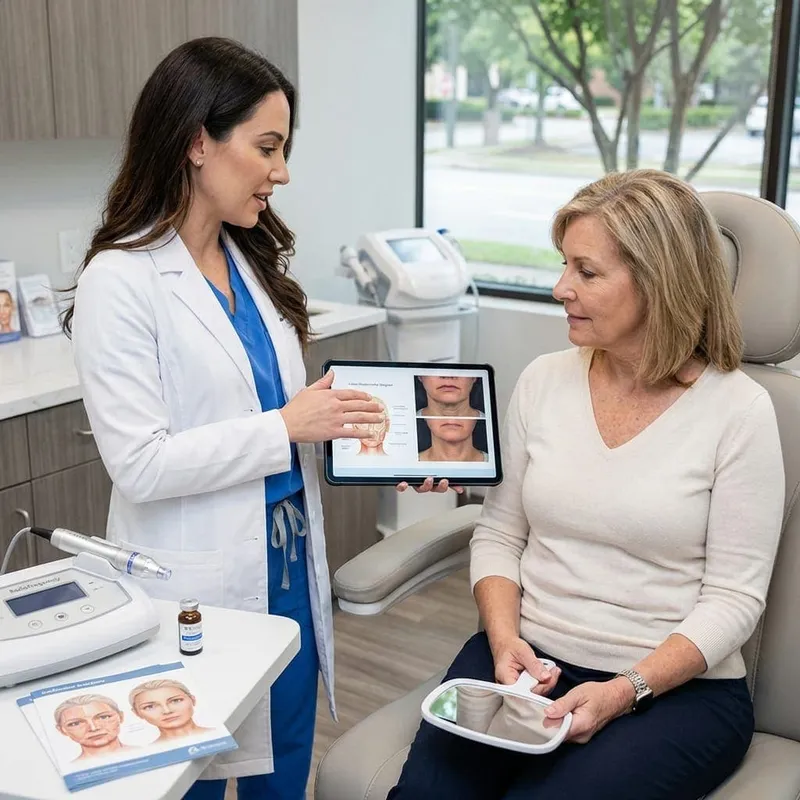
Best Non-Surgical Lower Face and Neck Tightening Treatments: Our Top Recommendations
Top non-surgical lower face and neck tightening treatments in Southlake, TX. Medrein Health's physician-reviewed recommendations for lift without surgery.
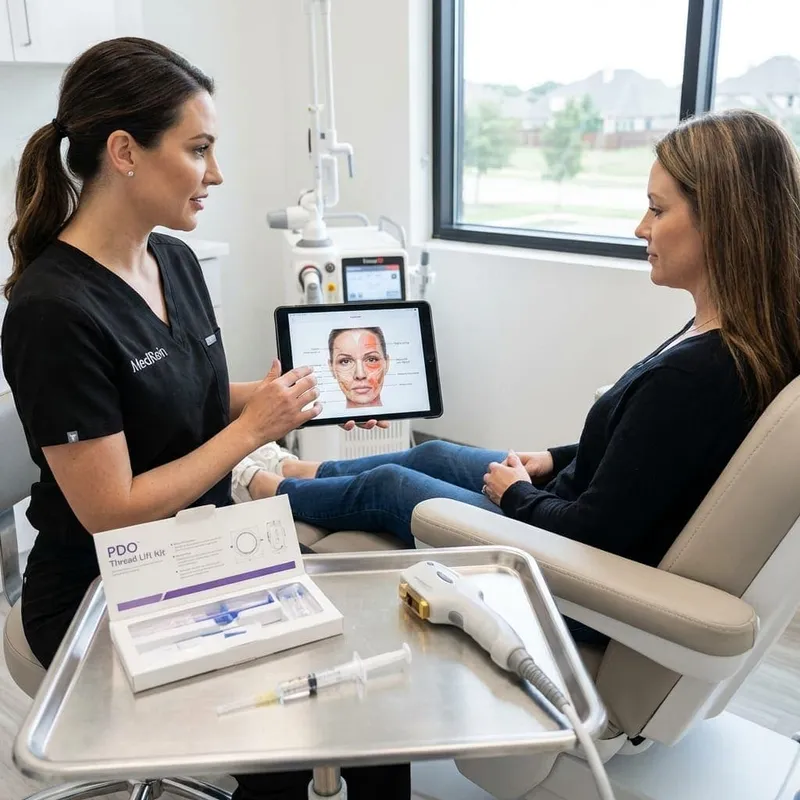
Non-Surgical Facelift Options: Achieve Youthful Contours Without Surgery at Medrein
Non-surgical facelift options at Medrein Health in Southlake, TX. Achieve natural contours without surgery using physician-supervised aesthetic treatments.