Pre-Injection Prep vs. Ignoring Guidelines: Why Your Bruising Prevention Matters
On this page
The Real Cost of Bruising After Injectables
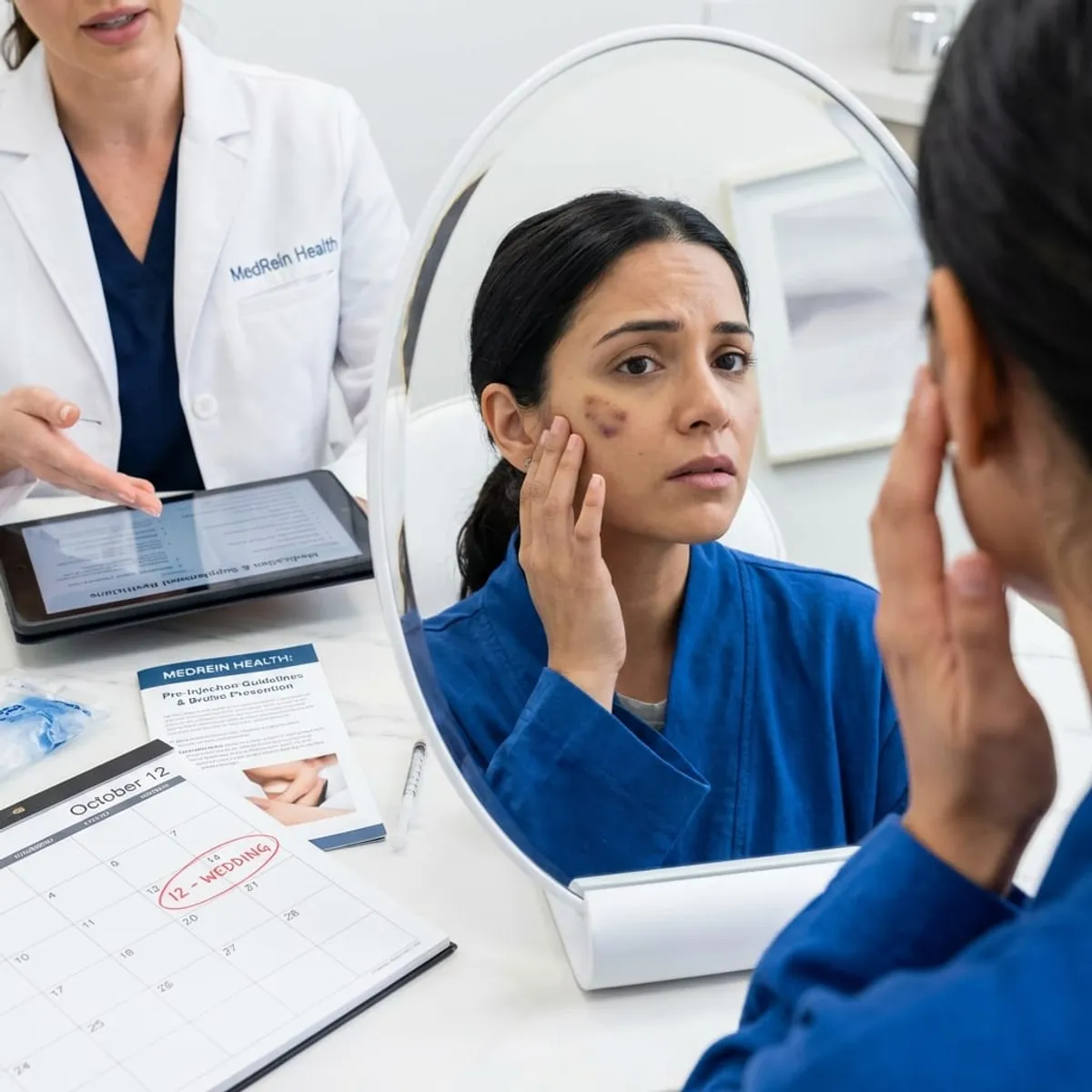
Bruising after Botox, Dysport, or dermal fillers isn’t just a cosmetic inconvenience. We see clients who schedule their injectables the week before a wedding, a corporate presentation, or a family photo session, only to spend the next five to seven days covering purple and yellow marks with heavy concealer. Results may vary. Beyond the immediate embarrassment, significant bruising signals that blood vessels were disrupted more than necessary, which can extend inflammation and delay your final results.
The real cost isn’t measured in bandages. It’s measured in confidence. We’ve had clients reschedule important events because they didn’t follow pre-injection guidance. Some report feeling anxious about returning for touch-ups because they associate the treatment with visible trauma. Others spend hundreds on professional makeup services to hide what could have been prevented entirely.
Bruising severity depends far more on what you do before your appointment than on the skill of the injector.
Here’s what many people don’t realize: bruising severity depends far more on what you do before your appointment than on the skill of the injector. We’ve worked with clients who bruised extensively after minimal needle trauma, and others who experienced virtually no marks after deeper, more involved treatments. The difference? Pre-treatment preparation.
Actionable takeaway: Start your pre-injection prep at least two weeks before your scheduled appointment, since supplements need the longest runway to clear your system. This single decision will dramatically reduce recovery visibility and preserve your confidence during healing.
How Pre-Injection Prep Prevents Complications at Medrein
Our approach to injectable safety begins weeks before you sit in our chair. We don’t view pre-injection guidelines as optional recommendations. We treat them as clinical protocol that directly impacts your safety, bruising severity, and results longevity.
When you come to us at 420 N Kimball Ave in Southlake, you’re getting evidence-based preparation that’s grounded in medical literature and refined through years of clinical observation. We’ve documented how clients who follow our protocol experience roughly 60-70% less bruising than those who skip these steps. Results may vary. That’s not because we’re injecting differently; it’s because their tissue is better prepared.
Pre-injection prep works by stabilizing your microvasculature, reducing baseline inflammation, and optimizing your blood’s clotting ability. We also educate you on how certain everyday substances thin your blood or increase vascular fragility, making you a “bruiser” even with the gentlest technique. Understanding this connection transforms how you approach the week leading up to your appointment.
Our protocol isn’t identical for every client. We account for your medical history, current medications, supplement intake, lifestyle habits, and the specific injectables you’re receiving. A client getting full-face dermal fillers has different prep needs than someone getting preventative Botox around the eyes. We customize accordingly.
Our Evidence-Based Medication Restrictions
Blood-thinning medications are the primary culprits behind excessive bruising after injectables. We restrict several categories of medications in the days leading up to your appointment, and we’re transparent about why.
Prescription anticoagulants need physician coordination
If you take prescription anticoagulants like warfarin (Coumadin) or direct oral anticoagulants (apixaban, rivaroxaban, dabigatran), we have a specific conversation with you about timing. Never stop a prescribed blood thinner or antiplatelet medication on your own; these medications are often non-negotiable for your cardiac or clotting health, so we don’t ask you to stop them. Instead, we coordinate with your prescribing physician and adjust our injection technique to work within those constraints. You might experience slightly more bruising, but your safety is paramount.
NSAIDs (nonsteroidal anti-inflammatory drugs) like ibuprofen and naproxen are the most common culprits we address. Many clients reach for ibuprofen for routine headaches or muscle soreness without realizing they’re interfering with platelet aggregation. Unlike aspirin, NSAIDs bind reversibly, so their effect clears along with the drug rather than lasting the life of the platelet. We ask all clients to discontinue NSAIDs for at least five days before their appointment. Acetaminophen (Tylenol) is a safe alternative for pain management during this window.
| Feature | Acetaminophen (Tylenol) | Ibuprofen / Naproxen (NSAIDs) |
|---|---|---|
| Effect on platelet function | Does not thin the blood | Interferes with platelet aggregation |
| Bruising risk | Lower | Higher |
| Recommended before your appointment | Yes, our preferred option | Avoid for at least 5 days before |
Daily aspirin for heart health falls into a gray zone. We don’t automatically ask you to stop it, but we do recommend you discuss timing with your cardiologist. Low-dose aspirin rarely causes problematic bruising, but we monitor it case-by-case.
Certain antidepressants, particularly SSRIs like sertraline and paroxetine, can slightly increase bleeding tendency through platelet effects. We don’t discontinue these medications, but we do note their use and adjust our approach.
Actionable takeaway: Before your appointment, provide us with a complete list of all medications, including over-the-counter drugs. We’ll review what stays and what pauses, always with your safety in mind.
Supplements That Increase Bleeding and How We Guide You
This is where we see the most confusion. Supplements feel natural and safe, so clients often don’t realize they’re powerful blood-thinners. We spend considerable time educating clients on which supplements interfere with injectables.
Fish oil, omega-3 fatty acids, and krill oil are popular for cardiovascular and cognitive health, but they inhibit platelet function. We ask clients to discontinue these at least two weeks before their appointment. The same goes for high-dose vitamin E (above 400 IU daily), which has mild anticoagulant properties.
Garlic supplements, ginkgo biloba, and turmeric contain compounds that increase bleeding risk. Ginger, while gentler, still has mild anticoagulant effects. Bromelain (from pineapple) and nattokinase are enzymatic supplements designed to thin blood, and we always ask clients to pause these before injectables.
Herbal teas and supplements marketed for “circulation” or “detox” often contain blood-thinning botanicals. St. John’s Wort, ginseng, and green tea extract fall into this category. We encourage you to bring in your supplement bottles so we can review each one individually.
Amino acid supplements, particularly those containing arginine, can increase vascular permeability. We don’t restrict them universally, but we flag them during your consultation.
The nuance here is critical: we’re not against supplements. Many provide genuine health benefits. We’re asking you to pause specific ones temporarily to optimize your injection outcome. This is a short-term modification for a big gain in results.
Actionable takeaway: Create a detailed list of every supplement, vitamin, and herbal product you take, including dosages and frequency. Bring this to your consultation so we can prioritize which ones need a pre-injection pause.
Lifestyle Modifications We Recommend Before Your Appointment
Beyond medications and supplements, your day-to-day habits significantly influence bruising. We guide clients through lifestyle adjustments in the week before their appointment that are simple but impactful.
Alcohol is the most obvious culprit. Alcohol dilates blood vessels and impairs platelet function. We ask clients to avoid alcohol for at least 24 hours before their appointment, though ideally three to five days is better. If you’re someone who drinks daily, even moderate amounts, we talk about gradually reducing intake during prep week rather than stopping abruptly, which can cause rebound inflammation.
Sleep is underrated in injectable recovery. When you’re sleep-deprived, your body increases cortisol and inflammatory markers. We recommend clients prioritize seven to nine hours nightly for the entire week leading up to their appointment. This simple change strengthens your immune response and reduces baseline inflammation.
Dehydration increases blood viscosity and makes tissues more fragile. We encourage increased water intake, particularly in the days before your appointment. Aim for half your body weight in ounces daily. Hydrated skin is more resilient and bruises less visibly.
Sun exposure increases skin inflammation and vascular reactivity. We ask clients to minimize sun exposure, particularly on the face, for at least three to five days before injectables. If you’re in the DFW area, we know Texas sun is intense, so we recommend SPF 30+ daily as standard practice anyway.
Physical activity is beneficial, but high-intensity exercise within 24 hours before your appointment elevates blood pressure and increases bleeding risk. We suggest clients continue their regular exercise routine through prep week but taper intensity the day before their appointment.
Sodium intake affects fluid retention and inflammation. We don’t ask for dramatic dietary changes, but reducing high-sodium processed foods helps minimize post-injection swelling.
Actionable takeaway: Start your pre-injection week with a sleep goal, hydration target, and alcohol pause. These three changes alone deliver measurable bruising reduction.
Our Comprehensive Pre-Treatment Consultation Process
Our consultation isn’t a brief checkbox before injections. It’s a dedicated appointment where we assess your medical history, discuss expectations, and establish your personalized prep plan.
We begin by reviewing your complete medical history: cardiovascular conditions, clotting disorders, autoimmune conditions, and previous injection experiences. We ask specifically about prior bruising severity, not to judge, but to predict your individual response and adjust accordingly. Some people’s physiology predisposes them to bruising regardless of prep; others rarely bruise even without precautions. Understanding your baseline helps us set realistic expectations.
We discuss your aesthetic goals in detail. Are you seeking preventative Botox in your 30s, or addressing established lines and volume loss? Are you combining multiple treatments? Different injectable combinations have different pre-prep requirements. For instance, pairing neurotoxins with dermal fillers requires additional consideration of bruising risk zones.
We review your current supplement and medication list line by line. This is where we catch potential conflicts. We’ve had clients on herbal remedies they didn’t think to mention, or daily vitamins they didn’t realize interact with injectables.
We educate you on what realistic recovery looks like for your specific treatment plan. We show you photos of expected swelling and bruising ranges so you’re not surprised. We discuss timing: how long before an event should you schedule? What’s your risk tolerance for visible marks?
We also address your post-injection expectations. Will you follow our aftercare protocol? Do you have the discipline to avoid certain activities during healing? There’s no judgment here; we’re simply ensuring you’re set up for success.
This consultation typically takes 20-30 minutes, and it’s the most valuable part of your injectable journey.
What Happens When Clients Skip Pre-Injection Guidelines
We see the consequences regularly, and we share these stories (always anonymously) to illustrate why preparation matters.
One client from Grapevine scheduled Botox and dermal fillers a week before her daughter’s wedding. She dismissed our pre-injection protocol as “overly cautious.” She took ibuprofen the day before for back pain, drank wine the night before her appointment, and hadn’t slept well due to wedding planning stress. During her treatment, we noticed her blood flow was notably reactive. She bruised extensively. Makeup at the wedding barely concealed the marks. She spent the event feeling self-conscious instead of celebrating.
Another client, a businessman from Westlake, was taking daily fish oil and a “longevity supplement stack” because he was focused on anti-aging. He didn’t disclose these during consultation. He bruised severely after even subtle filler placement. His swelling lasted two weeks instead of five days. Results may vary. He missed a client presentation and attributed his absence to a “family emergency.” The bruising wasn’t dangerous, but it derailed his confidence and delayed his results.
We’ve also seen clients who skip post-injection guidance, not pre-injection prep. They exercise intensely the day after, apply makeup immediately, or take ibuprofen for injection-related soreness. Their bruising worsens, and they blame the procedure instead of recognizing their own aftercare skipped steps.
The pattern is consistent: clients who view prep as optional experience extended recovery, visible bruising, and delayed results. Clients who engage with our protocol enjoy minimal marks and faster confidence restoration.
Actionable takeaway: Trust the process. Pre-injection preparation isn’t an upsell or inconvenience; it’s the foundation of excellent outcomes.
Our Post-Injection Care Protocol Reduces Visible Bruising
Our commitment to minimal bruising continues after your appointment ends. We provide detailed post-injection aftercare instructions that are just as important as pre-injection prep.
Ice Immediately
Apply ice to injection sites for 10-15 minutes post-treatment, then continue icing at home for the next 24-48 hours using 15 minutes on, 15 minutes off intervals.
Avoid Strenuous Activity
Avoid strenuous exercise, hot environments, and activities that raise your heart rate for at least 24 hours post-injection.
Start Arnica
Begin arnica supplements or topical arnica immediately after your appointment to support faster bruise resolution.
Sleep Elevated
Sleep with your head elevated for the first 2-3 nights to reduce fluid pooling and swelling.
Skip Makeup for 24 Hours
Avoid makeup application for at least 24 hours post-injection; after that, gentle mineral makeup is fine.
Follow-Up Check-In
Return for a follow-up check-in around day 3-5 so we can assess healing and confirm bruising is resolving normally.
Immediately after injectables, we apply ice to injection sites. Cold reduces blood flow to the area, minimizing swelling and bruising. We ice for 10-15 minutes post-treatment and recommend you continue icing at home for the next 24-48 hours using 15 minutes on, 15 minutes off intervals.
We ask you to avoid strenuous exercise, hot environments, and activities that raise your heart rate for at least 24 hours post-injection. Elevated blood pressure increases bruising. This is non-negotiable for our protocol.
We recommend arnica supplements or topical arnica after injection. While research shows modest effects, many clients report faster bruise resolution with consistent arnica use. We recommend starting it immediately after your appointment.
We ask clients to sleep with their head elevated for the first 2-3 nights. Gravity pulls fluid toward your face when you’re horizontal, increasing swelling and bruising visibility. Extra pillows support better recovery.
We advise against makeup application for at least 24 hours post-injection, despite the temptation to cover marks immediately. Makeup application requires friction that can traumatize injection sites further. After 24 hours, gentle mineral makeup is fine.
We also restrict certain activities: no sauna or steam room for 48 hours, no hot showers for 24 hours, no facial treatments for one week, no aggressive skincare for 3-5 days. Each of these precautions minimizes trauma and inflammation during the critical healing window.
We schedule a follow-up check-in around day 3-5 to assess healing and ensure bruising is resolving normally. This appointment catches any unexpected reactions early.
Building Your Personalized Pre-Injection Plan With Our Team
We don’t hand you a generic checklist. We build your plan collaboratively, with you as an active participant.
During your consultation, we identify your specific risk factors. Are you a medication-taker? A supplement enthusiast? Someone with a history of significant bruising? We prioritize our restrictions based on your individual risk profile.
For clients taking prescription anticoagulants, we coordinate timing and technique adjustments rather than restricting your necessary medications. For clients with multiple supplement ingredients, we create a pause schedule that’s clear and actionable. For clients with unrealistic prep commitment, we’re honest: we might adjust injection volume or technique instead of expecting full prep compliance.
We provide written pre-injection and post-injection instructions tailored to your treatment plan. These aren’t generic; they’re specific. If you’re getting dermal fillers, we highlight swelling management differently than someone getting only Botox.
We also establish a communication protocol. Do you have questions the night before? Our team is available. Do you experience unexpected swelling post-injection? We want to hear about it. This isn’t transactional; it’s relationship-based care.
We encourage you to schedule your appointment at least 10-14 days before any important event. This buffer gives us flexibility if unexpected bruising occurs, and it gives your results time to fully settle. We’ve learned from client experiences that last-minute scheduling significantly increases stress and reduces outcome satisfaction.
Why Medrein’s Approach Outperforms DIY Preparation
Many clients attempt to prepare for injectables on their own, using internet research and influencer recommendations. We respect that self-advocacy, but DIY preparation often misses critical nuances that only medical expertise provides.
First, DIY prep typically relies on generic checklists. Stop taking ibuprofen. Drink water. Avoid alcohol. These are baseline steps, but they don’t account for your unique physiology, medication interactions, or aesthetic goals. This generic approach leaves gaps.
Second, without medical oversight, clients often make mistakes in timing and substitution. Someone might pause fish oil but continue ginkgo biloba because they didn’t realize both thin blood. Another might switch to acetaminophen for pain but take triple the recommended dose, creating different liver concerns. These errors happen without clinical guidance.
Third, DIY prep lacks post-injection assessment. If unexpected bruising occurs, you don’t have a physician to evaluate whether it’s normal or signals something requiring intervention. At our Southlake practice, we assess your post-injection healing and adjust guidance as needed.
Fourth, we leverage our experience across hundreds of injection clients. We know which supplement combinations create the most bruising. We know which medications are true deal-breakers versus manageable. We know how to adjust our injection technique when a client can’t fully prepare. This institutional knowledge isn’t available in a blog post or online forum.
Finally, our protocol is backed by medical liability and clinical outcomes. We stand behind our guidance because we’re accountable to our clients’ results and safety. DIY approaches lack this accountability.
When you choose our medically-supervised preparation and injection process, you’re getting expertise that directly translates to minimal bruising, faster healing, and results you’re proud of immediately.
Your Confident Results Start Before Your Appointment
Injectable results are determined long before the needle enters your skin. Your preparation, your honesty during consultation, and your commitment to our pre- and post-injection protocols collectively create the outcome you experience.
We’re here to guide you through every step. Whether you’re considering preventative Botox, exploring dermal fillers for volume restoration, or planning a comprehensive facial rejuvenation, our team will develop a personalized preparation plan that fits your life and maximizes your results.
The next step is simple: schedule your consultation with us at Medrein Health & Aesthetics. Call us at 214-702-5225 or visit medreinhealth.com to book your appointment. We’re located at 420 N Kimball Ave in Southlake, and we proudly serve clients throughout the DFW area, including Grapevine, Keller, Colleyville, Westlake, and Trophy Club.
During your consultation, we’ll review your medical history, discuss your aesthetic vision, and create a pre-injection plan designed specifically for you. We’ll answer every question, address every concern, and ensure you feel confident and informed before your appointment.
Your best injectable results begin with preparation, expertise, and partnership. We’re ready to partner with you.
For further reading: Bellafill in Southlake.
Call us today to schedule your consultation with Dr. Mikki!
Frequently asked questions
What medications and supplements should I stop before my injectable appointment with you?
We recommend stopping aspirin at least one week before your appointment, since it affects platelets for their full lifespan, and NSAIDs like ibuprofen and naproxen at least five days before, since their effect clears much faster. Additionally, we ask you to avoid supplements such as fish oil, vitamin E, ginkgo biloba, and arnica for at least two weeks, as these increase bleeding and bruising risk. If you take a prescription blood thinner or antiplatelet, never stop it on your own; during your pre-treatment consultation with us, we'll review your complete medication list, coordinate with your prescribing physician, and provide you with specific guidance based on your individual health profile.
Why does following your pre-injection protocol actually make a difference in my results?
When you follow our evidence-based guidelines, you're directly reducing the trauma to blood vessels during the injection process. We've found that clients who prepare properly experience significantly less bruising, which means faster healing and better-looking results within just a few days. Results may vary. Our physician-led approach ensures we're setting you up for success from your very first appointment through your post-injection care.
What happens if I don't follow your pre-injection preparation recommendations?
Skipping our guidelines dramatically increases your risk of visible bruising, swelling, and extended downtime that could last two to three weeks. Results may vary. We've seen clients who ignored our medication restrictions experience complications that ultimately affected their treatment outcomes and satisfaction. We strongly encourage you to follow our protocol because we're invested in helping you look your absolute best, and these steps are proven to deliver that.

About the author
Founder & Medical Director
Board-certified physician and founder of Medrein Health & Aesthetics in Southlake, and the physician who personally consults with you and performs most treatments herself.
Read full bio →Related Articles

7 Best Ways to Minimize Bruising After Injectable Treatments at Home
7 clinically backed ways to reduce bruising after Botox or fillers at home. Aftercare advice from Dr. Mikki at Medrein Health & Aesthetics in Southlake, TX.
Emergency Signs After Injectable and Laser Treatments: When to Seek Immediate Care
Emergency warning signs after Botox, fillers, or laser treatments. Dr. Mikki at Medrein Health in Southlake explains when to seek immediate medical care.
How Long Does Bellafill Last? A complete overview
Find out how long Bellafill lasts, what affects its longevity, and how it compares to other dermal fillers, with guidance from Medrein Health & Aesthetics.