How Hormones Transform Your Skin: Bioidentical HRT vs Synthetic Options
On this page
Why Your Skin Changes When Hormones Decline
If you’ve noticed your skin becoming thinner, drier, or losing its natural glow over the past few years, hormones may be the culprit. At MedRein Health and Aesthetics in Southlake, we’ve worked with hundreds of patients from across the DFW area who discovered that topical creams and serums alone couldn’t address what was happening beneath the surface. The truth is, declining hormone levels don’t just affect how you feel; they fundamentally change your skin’s structure, elasticity, and moisture retention.
This is where bioidentical hormone replacement therapy (HRT) becomes transformative. When we balance your hormones at the cellular level, your skin responds with visible improvements: better hydration, improved firmness, and a restoration of that youthful radiance you may have thought was permanently lost.
Your skin is incredibly responsive to hormonal shifts. Hormones like estrogen, progesterone, and testosterone regulate collagen production, skin thickness, and your skin’s ability to retain water. When these levels drop, your skin essentially loses critical support systems it has relied on for decades.
During perimenopause and menopause, women experience a particularly sharp decline in estrogen. Men undergoing andropause face similar but testosterone-driven changes. The result appears quickly: fine lines deepen, skin becomes papery and fragile, dark spots multiply, and that plump, hydrated appearance fades.
What happens at the cellular level? Reduced estrogen means lower hyaluronic acid production, decreased fibroblast activity (the cells that make collagen), and slower skin cell turnover. Your skin barrier weakens, making it more sensitive and prone to dryness and irritation.
Reduced estrogen means lower hyaluronic acid production, decreased fibroblast activity, and slower skin cell turnover.
We’ve observed this pattern consistently in our patients across Grapevine, Keller, and Colleyville. The good news is that restoring hormonal balance doesn’t require waiting for natural levels to stabilize on their own. When you optimize your hormones, your skin begins healing from the inside out.
The Estrogen Connection: How Hormonal Loss Affects Skin Quality
Estrogen is perhaps the most influential hormone for skin health. It influences dermal thickness, collagen density, skin elasticity, and even sebum production. When estrogen declines, every aspect of skin quality suffers.
Here’s what we see clinically:
- Collagen breakdown accelerates: Without adequate estrogen, collagen degrades faster than your body can replace it. Skin loses structural support, leading to sagging and deepened wrinkles.
- Hydration plummets: Estrogen helps your skin maintain moisture. As levels drop, your skin can’t hold water as effectively, leading to a dehydrated, dull appearance.
- Skin barrier integrity weakens: A healthy skin barrier requires proper lipid and protein balance. Lower estrogen compromises this barrier, making your skin reactive and uncomfortable.
- Pigmentation becomes uneven: Hormonal fluctuations trigger increased melanin production in patches, creating the age spots and melasma we often see in our patients.
- Elasticity declines: Estrogen supports elastin fibers. When estrogen drops, your skin loses its “bounce back” quality, making it look tired and aged.
Our HRT for women program specifically addresses these changes by restoring estrogen to optimal levels. Within weeks, many of our patients report noticing their skin feels softer and more hydrated. Over months, structural improvements become visible.
Bioidentical Hormones vs Synthetic: What the Research Shows
This is where the conversation gets important, and we want to be completely transparent with you. There is a meaningful difference between bioidentical and synthetic hormone replacement options.
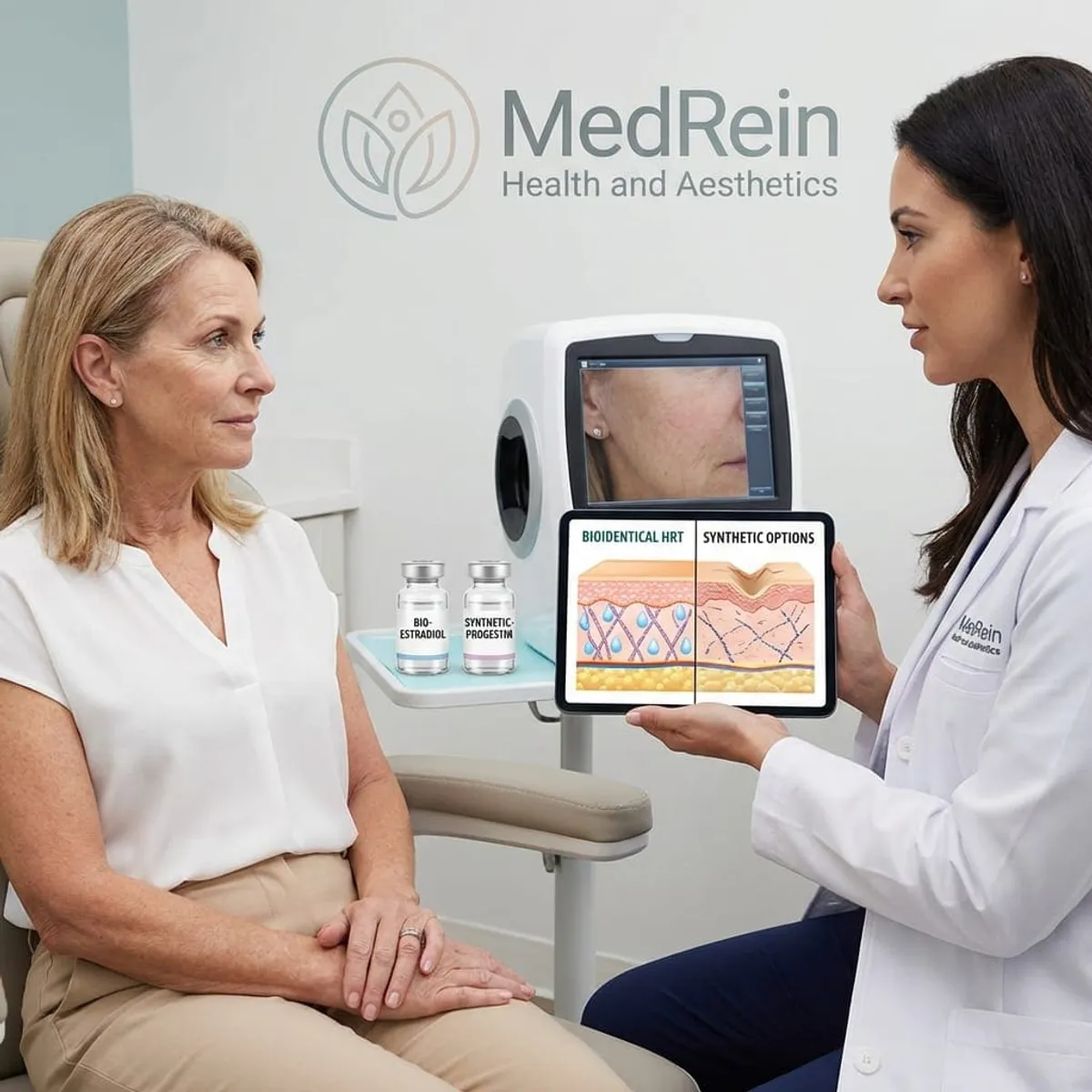
Bioidentical hormones have the exact same molecular structure as the hormones your body naturally produces. Synthetic hormones, while effective, have chemical structures that differ from your body’s natural hormones. Your body recognizes and processes bioidentical hormones as if they were your own.
The research supports this distinction:
| Feature | Bioidentical | Synthetic |
|---|---|---|
| Skin outcomes | Superior skin quality improvements reported in studies | Effective, but less physiologic absorption and utilization |
| Inflammation | Generally produces less inflammatory response | Can trigger systemic inflammation: skin sensitivity, rosacea flares, delayed healing |
| Tolerability | Fewer side effects, better overall adaptation | Effective, but less consistently tolerated |
| Cellular recognition | Fits your skin’s hormone receptors precisely for optimal cellular communication | Different molecular structure activates those receptors less precisely |
We prioritize bioidentical options at our Southlake clinic because we’ve witnessed the difference in patient outcomes. Your skin will respond more robustly when the hormone structure matches what your body expects.
How We Personalize HRT to Transform Your Skin at MedRein
At MedRein, we don’t offer a one-size-fits-all approach to hormone replacement. Your hormonal imbalance is unique to you, and your skin’s response will be equally individual.
Our process begins with comprehensive lab work. We measure not just estrogen and testosterone, but also DHEA, progesterone, thyroid function, and other markers that influence skin health. This data tells us exactly what your body needs and guides our dosing strategy.
We use bioidentical HRT therapy through multiple delivery methods:
- Pellet therapy: Small compounded pellets inserted under the skin release consistent doses over months, providing steady hormone levels without daily pills or patches.
- Topical creams and gels: Customized formulations applied to areas with excellent absorption, allowing flexibility in dosing.
- Oral options: When appropriate, we recommend compounded tablets tailored to your specific needs.
During your consultation, we discuss your skin concerns, aesthetic goals, and health history. This informs whether you’d benefit from estrogen alone, progesterone support, testosterone optimization (yes, women benefit too), or a combination approach.
Most patients begin noticing skin improvements within 4-6 weeks. By three months, the structural changes become evident: improved firmness, better hydration, and a more youthful complexion. Every patient progresses differently, and we adjust your protocol based on how your skin responds. Results may vary.
Combining HRT With Our Advanced Skin Treatments for Optimal Results
Restoring hormonal balance creates the ideal foundation for your skin to heal. But we’ve discovered that combining HRT with our advanced aesthetic treatments accelerates and amplifies results.
When your hormones are optimized, your skin cells are primed to respond to treatments. Your collagen remodeling happens more efficiently, your skin barrier heals faster, and your overall results are more dramatic.
Here’s how we structure this integration:
Once your HRT protocol is established and your hormones are stable, we layer in targeted treatments like Sciton BBL Heroic for sun damage and pigmentation, radio frequency microneedling to stimulate deeper collagen remodeling, or Fotona 4D laser treatments for skin tightening and tone refinement. These treatments work synergistically with your balanced hormones to create comprehensive rejuvenation.
Our patients in Westlake, Trophy Club, and surrounding areas often combine HRT with Halo Tribrid laser treatments for dramatic skin resurfacing, or choose Hydrafacial and chemical peels for maintenance and sustained improvement. The combination is far more effective than either approach alone.
For those concerned about fine lines and volume loss, bioidentical HRT softens the appearance of wrinkles while we use dermal fillers and Sculptra strategically to restore lost volume. The result feels natural because the skin itself is healthier.
Real Results: Hormone-Balanced Skin Transformation
We’ve witnessed remarkable transformations in our Southlake clinic. One patient came to us frustrated that expensive serums weren’t improving her skin texture and dull complexion despite good skincare habits. After six weeks of HRT, her skin already looked fresher. After six months, combined with quarterly Halo Tribrid treatments, she said her skin looked like it had been restored five years. Results may vary.
Another patient struggled with hormonal acne and uneven pigmentation. Balancing her hormones addressed the acne at its source, while laser treatments handled the remaining pigmentation. She finally felt confident without heavy makeup. Results may vary.
These aren’t isolated cases. The pattern is consistent: patients who address hormonal imbalance see skin improvements that topical products alone could never achieve. Their skin becomes more resilient, more radiant, and genuinely healthier.
The MedRein Difference: Physician-Supervised Hormone and Aesthetic Integration
This is what sets our approach apart. We’re not a medical spa that adds HRT as an afterthought, nor are we a hormone clinic that ignores the aesthetic transformation that’s possible.
Our entire philosophy centers on physician-supervised integration of hormonal health and aesthetic medicine. Every HRT protocol is created and monitored by a board-certified physician who also understands advanced skin treatments. This means your hormone therapy supports your aesthetic goals, and your aesthetic treatments are chosen with your hormonal status in mind.
We communicate between our medical team and aesthetic specialists. If you’re starting HRT, we ensure your skin treatments are timed appropriately. If you’re undergoing laser treatments, we optimize your hormonal support to maximize healing. This coordinated approach is rare in the medical aesthetics industry, and it’s why our patients achieve results that exceed their expectations.
Ongoing monitoring is part of the plan
We also maintain ongoing monitoring. Regular follow-up labs ensure your hormones remain in the optimal range, and we adjust as needed. Your skin becomes a visible indicator of your overall hormonal health and vitality.
Next Steps: Your Customized Hormone and Skin Health Plan
If you’re ready to explore how bioidentical hormone replacement therapy can transform your skin, we’d like to guide you through the process.
Start by scheduling a consultation with our team. We’ll review your skin concerns, discuss your hormonal health history, and explain how optimized hormones can enhance your appearance from within. Bring any questions about HRT, synthetic versus bioidentical options, or how we’d combine treatment approaches for you specifically.
During your visit, we’ll order comprehensive labs and develop an honest, personalized plan that fits your goals and timeline. There’s no pressure and no generic protocol; everything we recommend is tailored to you.
You can book your consultation through medreinhealth.com or call us directly. We serve patients throughout the DFW area, including Southlake, Grapevine, Keller, Colleyville, Westlake, Trophy Club, and beyond. Many of our patients have traveled from across Dallas and Tarrant counties because they appreciate our integrated, physician-led approach.
Your skin has the potential to look and feel dramatically better when your hormones are balanced. We’re here to make that happen.
Call us today to schedule your consultation with Dr. Mikki!
Frequently asked questions
How quickly will I see skin improvements after starting bioidentical HRT?
Most of our patients notice initial changes within 4-6 weeks, with more significant improvements in skin texture, hydration, and clarity appearing around 3-4 months. We’ve found that the timeline varies based on your individual hormone levels, age, and how personalized your dosing is. To maximize results, we often recommend combining HRT with our targeted skin treatments like microneedling or laser resurfacing, which accelerates the transformation you’ll see in the mirror.
What’s the difference between bioidentical and synthetic hormones when it comes to skin health?
Bioidentical hormones have the same molecular structure as the hormones your body naturally produces, allowing your skin cells to respond more efficiently to estrogen and progesterone at the cellular level. Synthetic hormones have a different chemical structure, which can produce results but may not activate your skin’s receptors with the same precision. We choose bioidentical options for our patients because research shows they deliver more natural-looking skin rejuvenation with better tolerance and fewer unwanted side effects.
Can HRT alone fix my aging skin, or do I need additional treatments?
While HRT addresses the hormonal foundation of skin aging by restoring moisture, elasticity, and collagen production, we find that combining it with our advanced aesthetic treatments produces the most dramatic transformations. We typically layer HRT with options like Halo laser, PDO threads, or radiofrequency microneedling to target specific concerns like texture, laxity, and sun damage that hormones alone won’t fully correct. During your consultation, we’ll create a customized plan that shows you exactly how HRT and our other treatments work together for your unique goals.

About the author
Founder & Medical Director
Board-certified physician and founder of Medrein Health & Aesthetics in Southlake, and the physician who personally consults with you and performs most treatments herself.
Read full bio →Related Articles
How Much Does Hormone Replacement Therapy Cost?
Wondering how much hormone replacement therapy costs? See what affects HRT pricing, average costs by method, and how insurance coverage factors into it.

HRT for Menopause Symptoms: A Physician's Guide to Restoring Balance
My physician's guide to HRT for menopause symptoms explains how we use bioidentical hormones to restore your sleep, clear brain fog, and protect your health.
5 Best HRT Options in Southlake: Why Medrein Health Stands Apart
The 5 best HRT options in Southlake, TX, and why physician oversight matters. Medrein Health offers personalized hormone therapy for men and women in DFW.