 Medically reviewed by
Dr. Haritha Mikkilineni, MD
Medically reviewed by
Dr. Haritha Mikkilineni, MD
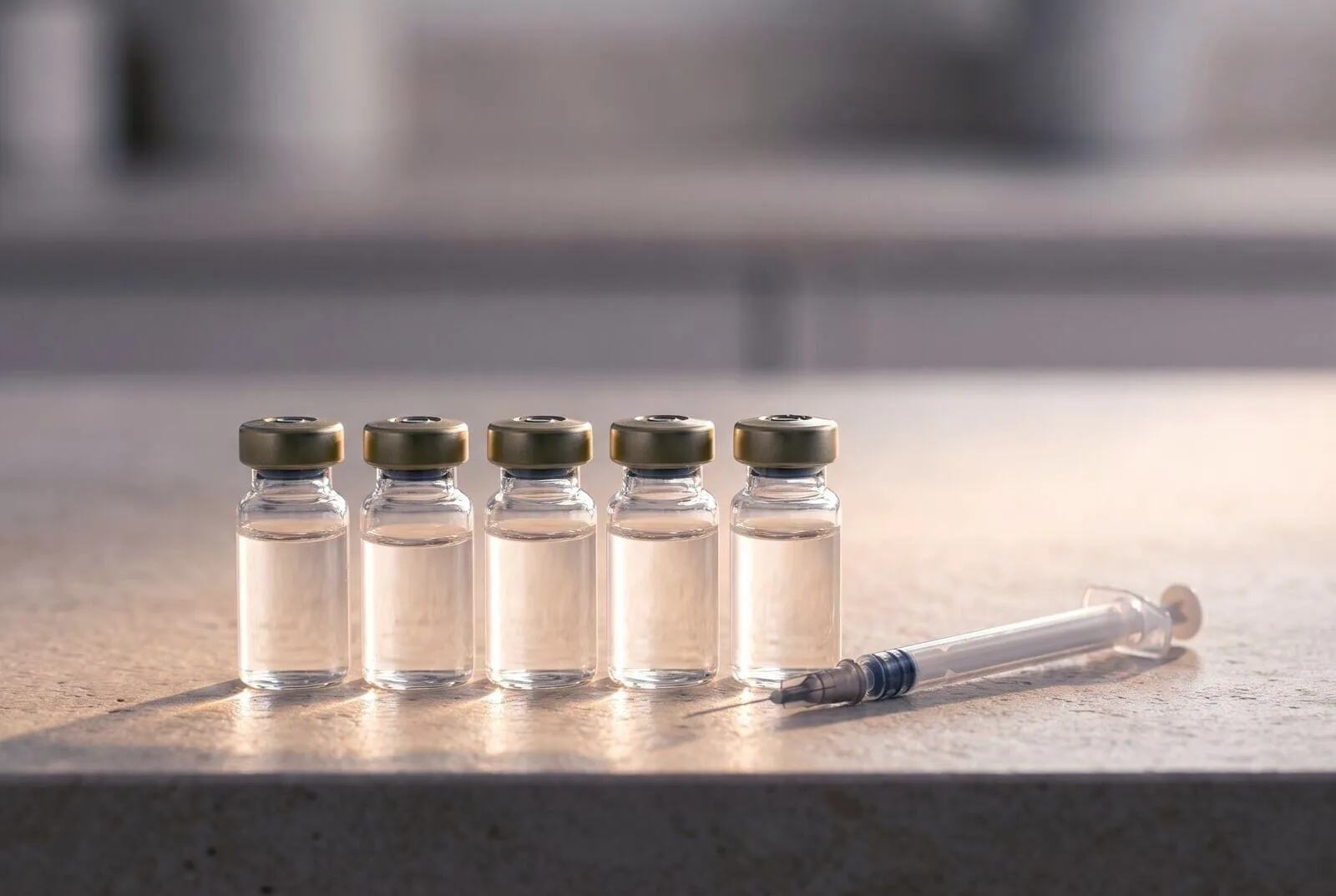
The KLOW Peptide Blend for Skin and Cellular Repair in Southlake, TX
The KLOW blend combines copper, repair peptides and KPV in one protocol, prescribed in Southlake by Dr. Mikki. KLOW is the Glow Complex of copper and repair peptides plus KPV, given as small subcutaneous injections under medical supervision.
- Google 4.8★
- Yelp 5.0★
Why Medrein for KLOW
Every peptide protocol at Medrein is prescribed and overseen by Dr. Mikki, our medical director, who spent 15 years in emergency medicine before founding the practice. Nothing is dispensed without a consultation with her.
Four peptides in one blend
KLOW starts from the Glow Complex, a blend of GHK-Cu with BPC-157 and TB-500, and adds KPV. The result covers skin quality, tissue repair, and inflammation in a single course. It sits alongside the repair peptides as Dr. Mikki's combined-blend option.
What is inside KLOW
KLOW compared with the Glow Complex
The two blends share three peptides. KLOW adds KPV for inflammation and gut support, which is the one difference between them. If your goal is skin quality alone, Dr. Mikki may recommend the Glow Complex without it.
| Feature | KLOW | Glow Complex |
|---|---|---|
| GHK-Cu for skin, hair, and nail quality | Included | Included |
| BPC-157 and TB-500 for tissue repair | Included | Included |
| KPV for inflammation and gut support | Included | Not included |
| Pharmacy-sourced and physician-supervised | Included | Included |
What a KLOW protocol looks like
Every plan in the peptide therapy program runs these four steps. Dose and schedule are set at your consultation and are not published here.
In-depth consultation
Dr. Mikki, a board-certified ER physician, takes your health and injury history, examines you, and sets the goal in plain terms. Which of the three blends fits, if any of them does, is decided here rather than online.
Lab work, then the blend
Blood work comes before a prescription. The protocol is then selected against your results and your goal, and the peptides are dispensed by reputable compounding pharmacies. Dr. Mikki is direct about why she insists on that route: she wants the contents and the potency of every vial documented before she puts her name to it.
Self-administered at home
KLOW is given as small subcutaneous injections with an insulin-type needle, usually into the abdomen, and you give them yourself. You are shown the technique before you leave and take the written plan with you.
Monitoring, then repeat labs
You are checked in with in the early weeks and again a month or so later, with repeat lab work around the two-to-three month mark. Dr. Mikki sets your dose herself and reviews it at follow-up alongside your labs and how you are doing. Her framing is that she manages the patient, not the numbers.

KLOW, Glow 70 and the Wolverine Stack
Three blends, one idea, built up a peptide at a time. Medrein also writes them as Klow 80 and Glow 70. The figures below are typical rather than promised. Individual results vary, and which blend fits is a consultation decision.
| Axis of comparison | KLOW (this page) | Glow 70 | Wolverine Stack |
|---|---|---|---|
| What is in it | KLOW:KPV, GHK-Cu, TB-500 and BPC-157 | Glow 70:GHK-Cu, TB-500 and BPC-157 | Wolverine Stack:TB-500 and BPC-157 |
| What it is built for | KLOW:The broadest of the three: inflammation, tissue repair, skin quality and general wellness in one protocol | Glow 70:Healing and recovery with the aesthetic side added: skin texture, firmness and hair | Wolverine Stack:Tissue repair on its own: tendons, ligaments, muscle and gut |
| Commonly used for | KLOW:Multiple or long-standing concerns at once, where KPV’s anti-inflammatory role is part of the reason for the blend | Glow 70:Recovery where skin quality is a goal in its own right | Wolverine Stack:Acute sports injuries, chronic tendinopathies, ligament and joint injuries, post-surgical recovery |
| Typical course length | KLOW:About 12 to 16 weeks, sometimes longer, with the mix customised to you | Glow 70:About 8 to 12 weeks | Wolverine Stack:About 4 to 12 weeks, depending on how severe the injury is |
| What patients commonly notice first | KLOW:Reduced inflammation in the first weeks; the fuller picture over roughly two to four months | Glow 70:Skin changes from a few weeks in, more marked by two to three months | Wolverine Stack:Pain reduction in the first weeks; healing over one to three months |
| How it is given | KLOW:Subcutaneous injection, self-administered at home | Glow 70:Subcutaneous injection, self-administered at home | Wolverine Stack:Subcutaneous injection, self-administered at home |
| Where it sits on cost | KLOW:The premium option of the three | Glow 70:Between the other two | Wolverine Stack:The most affordable of the three |
The narrower two have pages of their own: the Wolverine Stack when repair is the whole goal, and the copper peptide when skin, hair and nail quality is.
Safety, sourcing and monitoring
What makes this supervised care
- Peptides are prescription medications. Dr. Mikki, a board-certified physician, writes and monitors every protocol herself, the distinction she draws with med spas where no physician is involved.
- The peptides in KLOW occur naturally in the body, which is part of why the blend is generally well tolerated under supervision.
- Health history, an examination and blood work come before a prescription, not after it.
- Every peptide is dispensed by reputable compounding pharmacies, so what is in the vial is known.
- You are monitored through the course and re-tested, and the plan is adjusted to how you respond.
Possible side effects
- Redness, itching or swelling where the injection is given.
- Temporary changes in water retention or appetite.
- Mild fatigue or shifts in energy while your body adapts.
- Side effects with these peptides are described as mild and uncommon, but report anything unexpected rather than waiting for your next visit.
- The published research behind peptide blends is still developing, and Dr. Mikki says so rather than around it.
Who the KLOW blend is for
Candidacy is confirmed at consultation against your history and your labs, and Dr. Mikki will point you to a narrower option when the broad blend is more than you need: the repair peptides when recovery is the whole goal, or the copper peptide when skin quality is.
A good fit
- More than one goal at once: skin quality, tissue repair and inflammation in the same plan.
- Not wanting to juggle separate vials and separate schedules for three or four peptides.
- Comfortable with a course measured in months, and with self-administered injections.
- Wanting the blend prescribed, sourced and monitored rather than assembled from online vendors.
Not the right treatment
- An active cancer diagnosis.
- Pregnancy, or trying to conceive.
- Retinopathy.
- Under 18.
- A single, narrow goal. If skin quality alone is the aim, the copper peptide on its own is the cheaper and simpler answer, and Dr. Mikki will say so.
Before you book, three things worth knowing
KLOW is a prescription protocol, so nothing is dispensed without a consultation, an examination and blood work. It is a course measured in months rather than a single treatment, and the injections are yours to give at home. And cost depends on the blend and how long you stay on it, so ask for a written quote at your visit rather than working from a range online. Results may vary.
Why patients choose the KLOW blend
These reflect common patient sentiment rather than verbatim quotes, and individual results vary.
I was looking at three different peptides and did not know where to start. Dr. Mikki explained how KLOW combines the skin and repair peptides with KPV, so I was not juggling separate vials. She set a realistic timeline rather than promising a glow overnight. Results may vary, but the plan made sense.
One blend, one schedule, and a physician who checked in. She adjusted the dose when I needed it.

KLOW peptide FAQs
What is KLOW?
KLOW is a combination peptide blend. It joins the Glow Complex, which is GHK-Cu with BPC-157 and TB-500, and adds KPV. In one protocol it brings together skin-quality support, tissue repair, and an anti-inflammatory peptide, and Dr. Mikki prescribes it under medical supervision.
What is the difference between KLOW and the Glow Complex?
KLOW is the Glow Complex, which is GHK-Cu, BPC-157, and TB-500 together, plus KPV, a peptide studied for inflammation and gut-lining support. That added peptide is the one difference between them, and it makes KLOW the broader blend of the two, which is why the practice pages it here rather than giving Glow Complex a separate page.
What does each peptide in KLOW do?
GHK-Cu is a copper peptide studied for collagen support and skin quality. BPC-157 and TB-500 are the repair peptides used in the Wolverine Stack for tissue recovery. KPV is studied for calming inflammation and supporting the gut lining. Together they cover skin, repair, and inflammation in one plan.
How is KLOW given, and how often?
KLOW is given as small subcutaneous injections. Dr. Mikki sets your dose and schedule at consultation based on your goals and your history, and she reviews it at follow-up alongside your labs and how you are doing rather than holding you to a fixed protocol.
When will I notice results, and where do the peptides come from?
Most patients follow a defined course over several weeks before skin and tissue changes become noticeable, and results may vary. Every peptide is sourced from reputable compounding pharmacies, and Dr. Mikki, a board-certified MD, sets the protocol and monitors you.
Am I a candidate for KLOW?
Candidacy is decided at consultation. Dr. Mikki reviews your goals, relevant history, and any medications, and she will recommend KLOW only when the combined blend fits what you need.
Who should not take KLOW?
Medrein lists four situations where these peptide blends are not appropriate: an active cancer diagnosis, pregnancy, retinopathy, and being under 18. Beyond those, Dr. Mikki reviews your full history and current medications before prescribing, and there are cases where she will recommend against it for reasons specific to you. That is what the consultation is for.
What happens at the first visit, and how is KLOW monitored?
The visit starts with an in-depth consultation: health and injury history, an examination, lab work, and agreeing what you are actually trying to achieve. Dr. Mikki then selects the protocol. KLOW is given as small subcutaneous injections you administer yourself at home, usually into the abdomen with an insulin-type needle, and you are shown the technique first. You are checked in with in the early weeks and again about a month later, with repeat lab work around the two-to-three month mark.
How does KLOW compare with Glow 70 and the Wolverine Stack?
They are three steps of the same idea. The Wolverine Stack is TB-500 with BPC-157 for tissue repair: tendons, ligaments, muscle and gut. Glow 70 adds GHK-Cu, so healing and skin quality are addressed together. KLOW, which the practice also writes as Klow 80, adds KPV on top of that for its anti-inflammatory role, making it the broadest of the three and the one used when several concerns are in play at once. Courses run longest for KLOW and shortest for the Wolverine Stack, and cost tracks the same order. Which one fits is decided at consultation, and results may vary.
Is the KLOW blend right for you?
Dr. Mikki reviews your goals and history, decides whether the combined blend fits, and sets your dose before you begin.
Board-certified MD · NPI 1891947438 · Licensed in TX and NM · 4.8★ from 131 Google reviews