Glycolic Acid Peel: Benefits, Side Effects & At-Home vs Pro
Medically reviewed by:

Founder & Medical Director
Is a glycolic peel right for your skin?
Dr. Mikki examines your skin type and chooses the acid and strength before anything is applied.
Book a Facial ConsultationA glycolic acid peel is a chemical peel built on glycolic acid, an alpha hydroxy acid (AHA) derived from sugar cane. Its molecule is the smallest of the common AHAs. That lets it penetrate the skin’s outer layer easily and loosen the bonds holding dull, built-up cells to the surface. This is part of why glycolic acid shows up in both drugstore serums and professional peels, at very different strengths.
What separates a light at-home acid from an in-office glycolic peel is concentration and pH, not the ingredient itself. The same acid can deliver a mild overnight glow, or a deeper exfoliation with a few days of visible flaking. How far it goes depends on the formula’s strength and how long it stays on the skin.
What a glycolic acid peel is and how it works
Glycolic acid belongs to the alpha hydroxy acid family, along with lactic acid. That group is kept separate from beta hydroxy acids such as salicylic acid. At Medrein, a glycolic acid peel is one of the acids offered within our chemical peel menu. Dr. Mikki examines your skin type and selects the specific acid and strength at your consultation.
As the acid sits on the skin, it breaks down the material holding dead surface cells together. Those cells shed over the following days, and the fresher layer underneath becomes visible. The depth of that process ranges from a light overnight refresh to several days of flaking. Concentration and pH decide where on that range a given peel lands.
Why concentration and pH matter
A low-concentration, higher-pH formula barely disturbs the surface. A higher concentration at a lower pH exfoliates more aggressively and reaches slightly deeper. Dr. Mikki weighs both numbers against your skin type and tolerance before deciding how far to take a session. The same acid, pushed too hard on sensitive or pigment-prone skin, can cause more irritation than benefit.
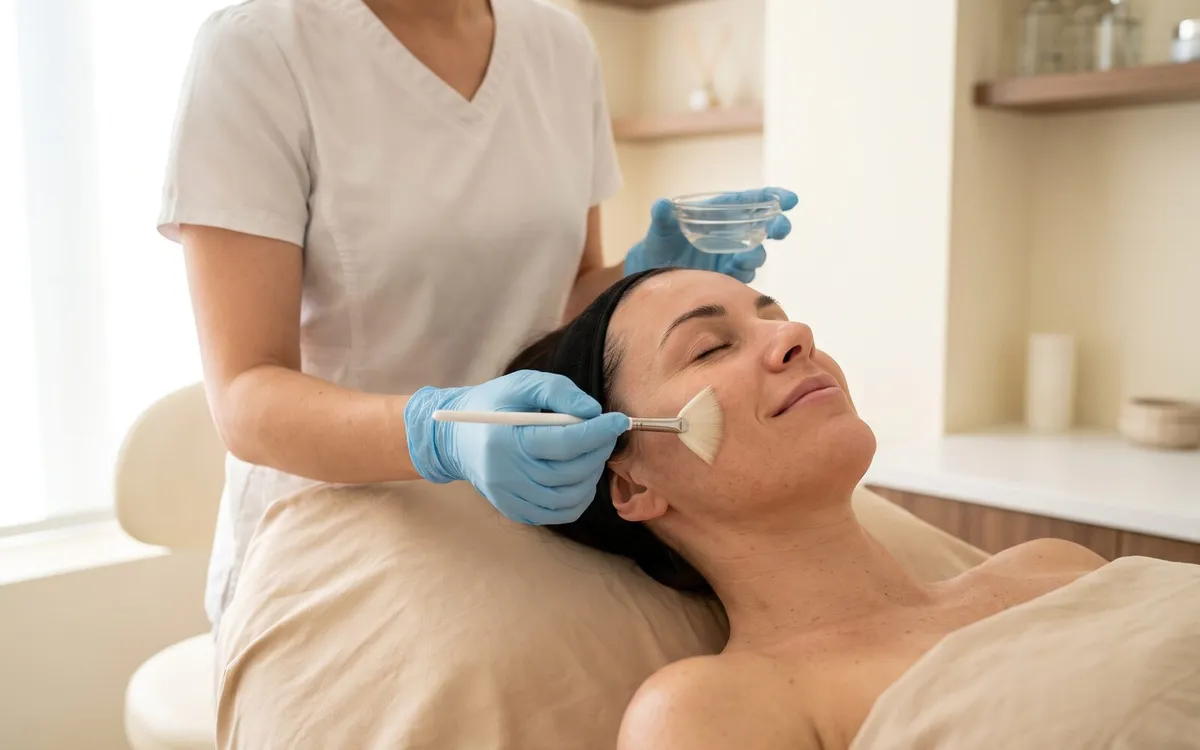
A typical session starts with a thorough cleanse to clear oil and makeup. Any barrier left on the skin can make the acid take unevenly. The glycolic solution goes on next and stays on the skin for a set time, based on your tolerance and the strength chosen. It is then neutralized or washed off before you leave. The visit usually runs under an hour, and most patients return to normal activities the same day.
Glycolic acid peel benefits
A glycolic acid peel generally addresses mild to moderate surface concerns. Reported benefits include a smoother surface texture, fewer visibly clogged pores, a brighter and more even-looking tone, and a softer look to fine surface lines. The mechanism is exfoliation, so these are texture and tone improvements. How much changes depends on your skin and the strength used.
Many patients pair an occasional glycolic peel with regular dermaplaning. That is a blade-based exfoliation, and it clears surface debris and fine vellus hair a chemical peel does not touch. Together they help keep skin smooth between peel sessions.
Glycolic acid peel vs salicylic acid peel
Glycolic acid is water-soluble and works broadly across the skin’s surface, suiting dullness, rough texture and early fine lines on most skin types. Salicylic acid is oil-soluble, so it can travel into oil-filled pores. That makes it a common choice for acne-prone or oilier skin. Neither acid is automatically the better choice. The right one depends on the concern being treated, and Dr. Mikki confirms which fits at your consultation.
Peels are also blended. A single session can combine a glycolic base with a touch of salicylic or lactic acid. That combination suits a skin type with both dullness and occasional breakouts.
Glycolic acid peel at home vs professional
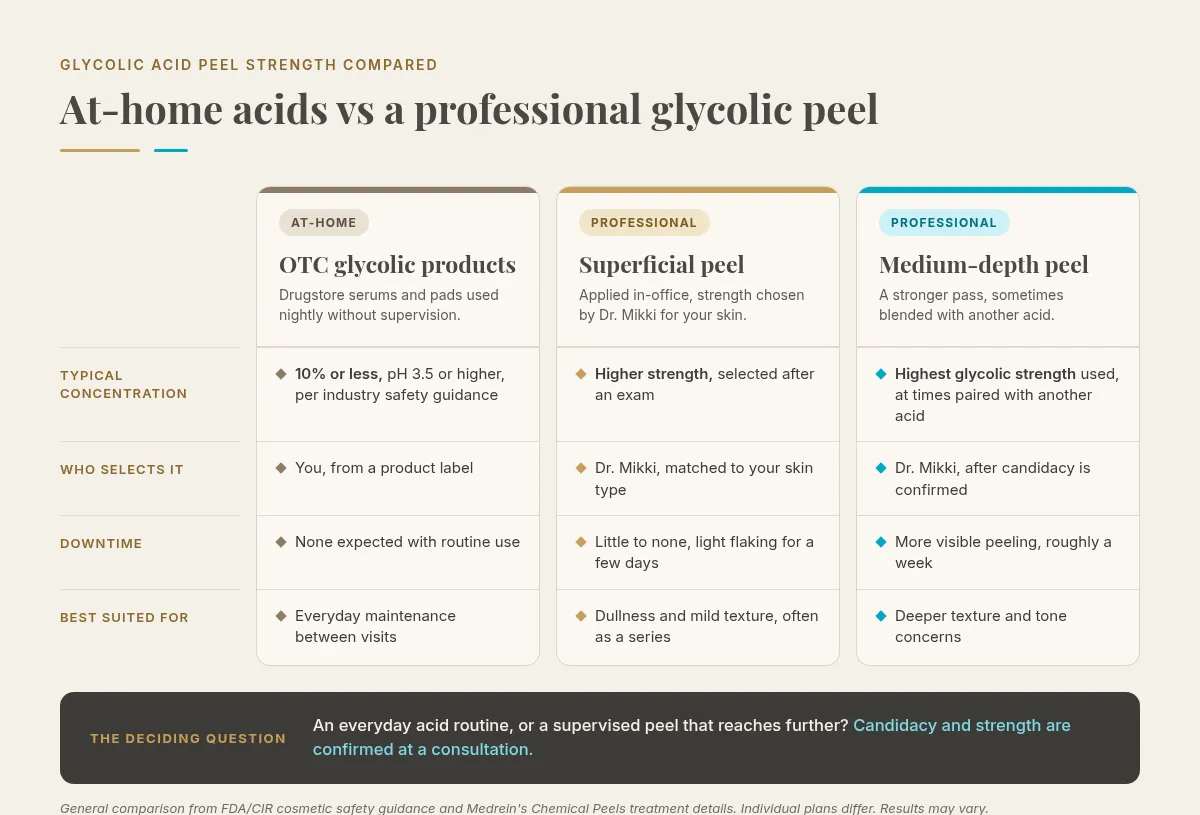
Over-the-counter glycolic products are formulated conservatively on purpose. Industry safety guidance recognized by the FDA considers an at-home AHA product safe for daily use at 10 percent concentration or less, with a pH of 3.5 or higher. That keeps the exfoliation gentle enough to use without supervision. FDA’s guidance on AHAs also recommends sun protection with any AHA product, since the acid temporarily increases the skin’s sensitivity to UV light.
A professional glycolic peel works outside that at-home ceiling. Dr. Mikki chooses the concentration, the pH, and how long the solution stays on the skin, based on your tolerance and your goal. An in-office peel can therefore reach a depth a drugstore product is not formulated to reach safely on its own. If you already keep an at-home acid routine, mention it at your consultation. Retinoids and other exfoliating products used in the days before a peel can make the skin react more than expected.
Glycolic acid peel side effects
The most common reactions are redness, a stinging or pulling sensation during the peel, and mild burning that settles within the visit. Over the following days, skin typically feels tight and dry and may flake visibly, especially after a stronger pass. A clinical review of glycolic acid peel therapy lists these as the expected minor effects. It also names a less common risk: transient postinflammatory hyperpigmentation, where the treated skin temporarily darkens as it heals.
That pigment risk is why candidacy matters more on darker skin tones. Deeper or poorly matched peels carry a higher chance of a pigment change in melanin-rich skin. Dr. Mikki reviews your skin type and history before recommending a strength. She may suggest pigment-safe lasers instead when melasma or active pigment concerns are the primary issue. Stopping retinoids and skin-lightening products about a week before a peel also lowers the odds of an uneven reaction.
Sun protection matters most in the days right after a peel. Freshly exfoliated skin reacts to UV light more readily than usual. Daily sunscreen, avoiding direct midday sun, and holding off on retinoids or other exfoliating actives for about a week afterward all lower the chance of irritation or a pigment change while the skin finishes shedding.
When to pause or skip a glycolic peel
A glycolic acid peel is postponed during pregnancy or breastfeeding, over an active cold sore, broken skin or sunburn, and for patients currently taking isotretinoin. Candidacy for pigment-prone skin is confirmed at your consultation, after Dr. Mikki examines your skin.
Glycolic acid peel before and after
With a light glycolic peel, the visible flaking is minor. Most patients notice a brighter, smoother surface within a few days, as the treated cells shed. A stronger pass sheds more visibly and takes longer to settle. The pattern stays the same either way: redness first, flaking in the middle days, then a fresher surface underneath. The American Academy of Dermatology describes this general recovery pattern across peel types, with timing that shifts by depth.
Our patient gallery includes facial treatment results you can look through for a sense of realistic outcomes. Every face starts from a different baseline. Another patient’s photos are only a rough guide to your own. Results may vary.
How many glycolic acid peels will you need?
A single glycolic peel gives a short-term refresh. The texture and tone changes patients notice most build with a series. Dr. Mikki typically spaces maintenance peels about four to six weeks apart, closer to every two weeks when the goal is active acne control. She adjusts the interval based on how your skin responds between visits.
If you want to understand how a complementary exfoliation method compares, our dermaplaning guide breaks down what it does and how often to get it. Patients on a Beauty Club membership also receive 10 percent off facials, including chemical peels, alongside the plan’s other monthly credits. That makes keeping up a regular peel series more affordable.
Timing a glycolic acid peel before an event
Because flaking and redness need time to resolve, a glycolic peel is not a same-week fix before a big event. For a lighter peel, plan on at least one to two weeks so any visible shedding and redness have time to settle. For a stronger pass, allow closer to three weeks. The skin takes longer to finish shedding, and the fresh layer underneath needs time to calm down before it photographs well. Booking a test peel well ahead of the actual event date also gives Dr. Mikki a chance to see how your skin responds before the one that matters.
Getting started with a glycolic acid peel at Medrein
A glycolic acid peel works well as a maintenance treatment for dullness, rough texture and early fine lines. It also serves as a lighter alternative to a deeper acid, when your skin or your schedule calls for less downtime. Whether a glycolic formula, a salicylic blend, or a different depth entirely fits your skin is best confirmed at a consultation. Our cost guide covers the factors that affect pricing if budget is part of your decision.
If your skin has started to look dull or rough and you want an honest read on what would help, book a consultation at our Southlake clinic. Dr. Mikki will examine your skin and recommend a strength before anything is booked.
Glycolic Acid Peel FAQs
What is a glycolic acid peel?
A glycolic acid peel uses glycolic acid, an alpha hydroxy acid derived from sugar cane. It loosens and exfoliates the outer layer of dead skin cells. The acid's small molecule size lets it penetrate quickly, which makes it one of the most common peel acids, used at a concentration and pH chosen for your skin.
What does a glycolic acid peel actually help with?
It is generally used for dullness, rough surface texture, visibly clogged pores and the look of early fine lines. It works on the skin's surface to improve texture and tone. How much changes depends on the strength used and your own skin. Sagging skin and deep wrinkles call for a different treatment. Results may vary.
Does a glycolic acid peel hurt?
Most patients describe a tingling or mild stinging sensation while the acid sits on the skin, plus some mild burning that settles once it is neutralized or removed. A stronger peel feels more intense than a light one. That is one reason Dr. Mikki matches strength to what your skin can tolerate.
What is the difference between a glycolic and a salicylic acid peel?
Glycolic acid is water-soluble and works broadly across the skin's surface, which suits dullness and texture concerns. Salicylic acid is oil-soluble and can travel into oil-filled pores. That makes it a common choice for acne-prone or oilier skin. A peel can also combine both acids for combination skin.
Can I do a glycolic peel at home instead of a professional one?
You can, but only at a lower-strength level: at-home AHA products are formulated conservatively, generally at 10 percent concentration or less, for everyday use without supervision. A professional glycolic peel uses a strength and pH selected by Dr. Mikki for your skin, so it can reach a depth an at-home product is not meant to reach safely on its own.
How many days before an event should I schedule a glycolic acid peel?
Plan at least one to two weeks ahead for a light peel, and closer to three weeks for a stronger one. Any flaking and redness need that time to resolve before the date that matters. A test peel well before the event lets Dr. Mikki see how your skin responds first.
How much does a glycolic acid peel cost at Medrein?
Cost depends on the acid and strength your plan needs. Medrein does not publish a per-treatment price list, so you receive a quote at your consultation. Beauty Club members receive 10 percent off facials, including chemical peels.
Ready to talk through your skin goals?
Book a consultation and Dr. Mikki will compare a light glycolic refresh against a deeper option for your skin and your timeline.
Related Articles
HydraFacial: What to Expect, Cost and How Long Results Last
HydraFacial in Southlake, TX: the 4-step vortex process, a results-timeline infographic, real cost guidance and candidacy notes before you book a consultation.
Best Skin Rejuvenation Treatments for Mature Skin: Our Complete Guide
Best skin rejuvenation treatments for mature skin at Medrein in Southlake, TX. Physician-guided options for tone, texture, and volume restoration.

Achieving the Elusive Korean Glass Skin: Your Ultimate Guide
Achieve Korean glass skin with a step-by-step routine, the key ingredients that help most, and professional treatments that support a smoother, hydrated glow.