HydraFacial: What to Expect, Cost and How Long Results Last
Medically reviewed by:

Founder & Medical Director
Is a HydraFacial the right facial for you?
Dr. Mikki examines your skin at consultation and confirms whether a HydraFacial, Dermaplaning or a Chemical Peel fits your goals.
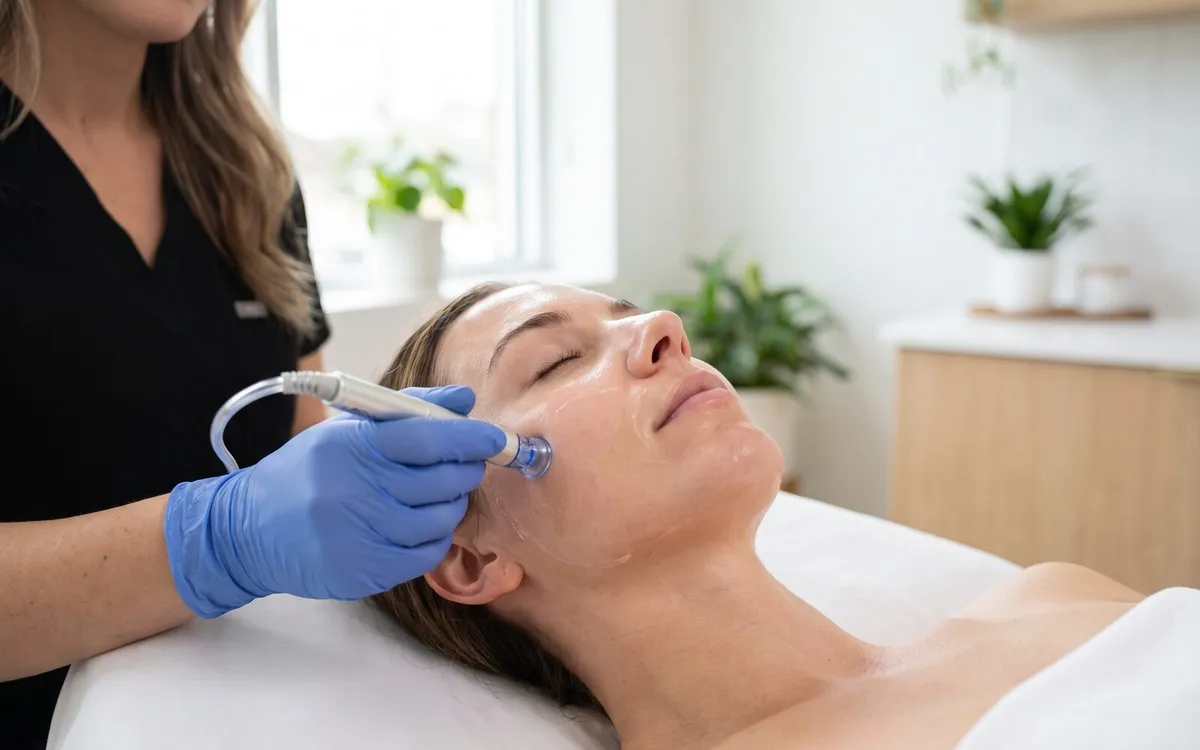
Book a Facial ConsultationA HydraFacial is a medical-grade hydradermabrasion treatment that cleanses, exfoliates, extracts and hydrates the skin in one continuous session. A handpiece delivers each step through a vortex of fluid, so the exfoliation comes from suction and liquid instead of a manual scrub or an abrasive pad.
The treatment sits at the gentler end of the facials Medrein offers, which is why it is often the first one a new patient tries. It addresses dullness, congestion, enlarged pores and rough texture, and most patients notice a visible difference the same day.
What a HydraFacial does to your skin
At Medrein, our HydraFacial treatment uses a vortex handpiece built around patented HydroPeel tips. The tip lifts dead surface cells and loosens debris in the pores, then suction draws that congestion out without hand-squeezing. In the same pass, hyaluronic acid and antioxidant serums saturate the surface of the freshly exfoliated skin.
The result is skin that reads brighter, more even and more hydrated, usually within hours of the appointment. The mechanism is water-based, so there is nothing to heal afterward. The treatment suits most skin types, including sensitive and reactive skin, since the aesthetician can swap in milder serums where needed.
Boosters can be added on top of the base treatment to target a specific concern, such as extra hydration or a brightening serum, and the aesthetician recommends one based on what your skin needs that day. Adding a booster changes the quote you receive at consultation but not the length of the appointment by much.
What a HydraFacial cannot do
A HydraFacial is built for maintenance and glow. It will not meaningfully soften deep acne scarring or significant sun damage on its own, and it does not reach the dermis the way a deeper peel or a device-based treatment does. When the concern is scarring, texture irregularities or collagen loss, Microneedling works at a different depth and is usually the more accurate tool. The aesthetician flags this at your evaluation, so you book the treatment that actually matches the concern.
What happens during a HydraFacial session
Every session follows the same four-part sequence, and the whole appointment runs 45 minutes to an hour with no anesthesia at any point.
Dr. Mikki evaluates your skin first and confirms a HydraFacial is the right fit. The aesthetician then cleans your skin and matches a serum to your skin type before the handpiece is used. The vortex tip cleanses and exfoliates with a gentle peel, uncovering a new layer of skin. Suction follows, drawing impurities out of the pores through the same tip so congestion clears without manual pressure. Finally, the skin is saturated with intense moisturizers and the serum chosen earlier, and most patients notice a visible change almost immediately.

How much does a HydraFacial cost
Medrein does not publish a per-treatment price list for facials. What a session costs depends on the boosters added and the plan the aesthetician recommends, and you receive a specific quote at your consultation before anything is booked.
Patients who get a HydraFacial regularly usually find it more affordable through Glow Club, the $225 a month plan that bundles a monthly HydroFacial with Dermaplaning or Microneedling, plus 10 percent off retail products. Dr. Mikki can confirm at your consultation whether the membership or a single session fits how often you plan to come in.
How long do HydraFacial results last
A single HydraFacial typically holds for about five to seven days before skin gradually returns toward its starting point. That window is short compared with a deeper peel, which is the main reason most patients book the treatment monthly instead of once.
Most patients settle into a monthly cadence once they find the result worth maintaining, and some add an extra session ahead of a wedding, holiday or other event where a same-day glow matters. The aesthetician sets your actual cadence at the first visit based on your skin type and what you are trying to maintain. Results may vary.
Is a HydraFacial worth it compared to an at-home routine
A good at-home routine (cleanser, exfoliating acid, moisturizer, SPF) can maintain healthy skin between appointments, but it cannot replicate what a HydraFacial does in a single pass. The handpiece clears pores with suction a washcloth cannot reach, and it delivers serum onto skin that has just been exfoliated, so the hyaluronic acid and antioxidants absorb into a cleaner surface than a nightly serum applied over the day’s buildup.
What you are paying for is the combination and the consistency: the same device-driven sequence every time, performed by someone trained to read your skin and adjust it on the spot. For patients who already keep a solid home routine, the treatment is less about replacing it and more about giving the skin a deeper reset on a predictable schedule.
HydraFacial compared with Dermaplaning and Chemical Peels
All three of Medrein’s facials exfoliate the skin, and none of them are interchangeable. The difference is how deep each one reaches and what it leaves you with afterward.
For hair and surface buildup, Dermaplaning uses a sterile blade to remove vellus hair and the very top layer of dead cells, a mechanical approach with no suction or serum step. For pigment and deeper texture, Chemical Peels use acid to exfoliate at a depth a HydraFacial does not reach, and recovery can include some visible flaking depending on strength. A HydraFacial sits between the two for depth and has no flaking or recovery window at all, which is why it pairs well as a monthly base with either one layered in periodically.
If you are comparing all three before you book, our Dermaplaning guide and glycolic acid peel article walk through what each one feels like and who it tends to suit.
Is a HydraFacial safe for sensitive or acne-prone skin
Sensitivity is one of the most common questions before a first HydraFacial, and it is usually one of the better-tolerated facials Medrein offers, precisely because nothing abrasive touches the skin. The aesthetician can swap in milder serums for reactive skin so the session stays comfortable without losing its effect.
For acne specifically, a 2022 clinical study published in the Journal of Clinical and Aesthetic Dermatology followed 20 patients with mild to moderate acne through six HydraFacial Clarifying Treatments over 12 weeks. Investigator-assessed clear or almost-clear skin rose from 20 percent of patients at baseline to 65 percent by the final treatment, and the series was generally well tolerated, with mild and short-lived redness or stinging the most common reactions. This was one small, unblinded study. Results may vary, and the aesthetician evaluates your skin before recommending a cadence.
Side effects and what to expect afterward
A HydraFacial is non-invasive, and most patients tolerate it comfortably with no numbing required. Some redness can show up right after the session, and it typically settles within a short period, sometimes the same afternoon.
This gentler profile matches how the American Academy of Dermatology describes non-invasive exfoliation treatments more broadly: they are safe across skin tones and carry little to no real downtime, which is part of why they appeal to patients who cannot build in recovery time. A HydraFacial works through suction and fluid, a gentler texture than the abrasive pad the AAD page describes, and it keeps the same no-downtime profile.
A true allergic reaction to a specific serum ingredient is uncommon but possible, which is one reason the aesthetician asks about your skin history and any known sensitivities before choosing what goes on your face. Tell the front desk about any new skincare products, retinoids or recent sun exposure when you book, since those can change how your skin responds that day.
Individual results vary with skin type, skin condition and how closely you follow aftercare guidance. A consultation is how Dr. Mikki confirms a HydraFacial is the right starting point for your skin, based on an exam of your skin that day.
Getting started with a HydraFacial at Medrein
A HydraFacial works best as a low-commitment way to find out what a medical-grade facial can do for your skin, with no recovery to plan around and a result you can judge the same day. Whether you stay with it monthly or use it to decide between Dermaplaning and a deeper peel, the next step is the same: a short evaluation before anything is scheduled.
If your skin has been looking dull, congested or tired lately and you want an honest read on what would help, book a consultation at our Southlake clinic. We will look at your skin and walk you through your options before you book anything further.
HydraFacial FAQs
Does a HydraFacial hurt?
Most patients describe it as comfortable, closer to a cool massage than a scrub. No numbing is needed. The vortex tip adjusts to sensitive skin, and the aesthetician matches the serum strength to what your skin can tolerate.
How much does a HydraFacial cost at Medrein?
Medrein does not publish a per-treatment price list, so cost depends on the boosters added and your plan. You receive a quote at your consultation. Glow Club members get a monthly HydroFacial with Dermaplaning or Microneedling built into a $225/month plan, plus 10% off retail products.
Is there any downtime after a HydraFacial?
No. Skin may look slightly flushed for a short period, then settles to a brighter, hydrated finish. Most patients return to makeup and work the same afternoon.
Can I get a HydraFacial with sensitive or acne-prone skin?
Yes. The treatment is customized with milder serums where skin is reactive, and it suits all skin types. A small clinical study of six HydraFacial Clarifying Treatments over 12 weeks found the series well tolerated in patients with mild to moderate acne, with mostly mild, short-lived redness or stinging. Individual results vary, and the aesthetician evaluates your skin before choosing what goes on it.
What happens at a HydraFacial consultation?
Dr. Mikki evaluates your skin's health and condition, confirms a HydraFacial fits your goals, and flags anything that needs a different treatment first. The aesthetician then cleans your skin and matches the serum to your skin type before the handpiece is used.
How is a HydraFacial different from a Chemical Peel or Dermaplaning?
A HydraFacial cleanses, extracts and hydrates with water-based vortex technology and no recovery. Dermaplaning removes vellus hair and surface cells with a sterile blade. A Chemical Peel uses acids to exfoliate more deeply and can involve visible flaking. The three are often combined into one treatment plan.
How often should I get a HydraFacial?
About once a month for most patients, since a single result holds for roughly five to seven days. Some patients add one before a specific event. The aesthetician sets a cadence based on your skin type and goals at your first visit.
Wondering if a HydraFacial fits your skin?
Book a consultation and we will look at your skin, explain your options and give you a quote before anything is scheduled.
Related Articles

Best Skin Rejuvenation Treatments for Mature Skin: Our Complete Guide
Best skin rejuvenation treatments for mature skin at Medrein in Southlake, TX. Physician-guided options for tone, texture, and volume restoration.

Achieving the Elusive Korean Glass Skin: Your Ultimate Guide
Achieve Korean glass skin with a step-by-step routine, the key ingredients that help most, and professional treatments that support a smoother, hydrated glow.
How Much Does a Chemical Peel Cost? Your Guide!
How much does a chemical peel cost by type? See pricing by peel depth, the factors that move it, and insurance rules from Medrein in Southlake, TX.